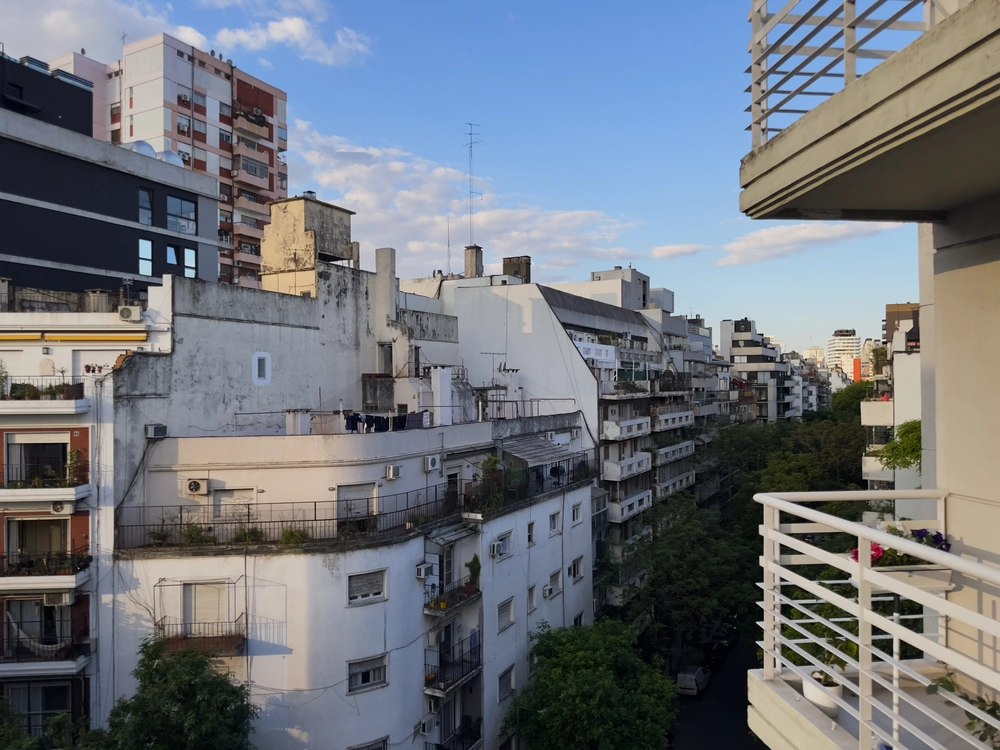
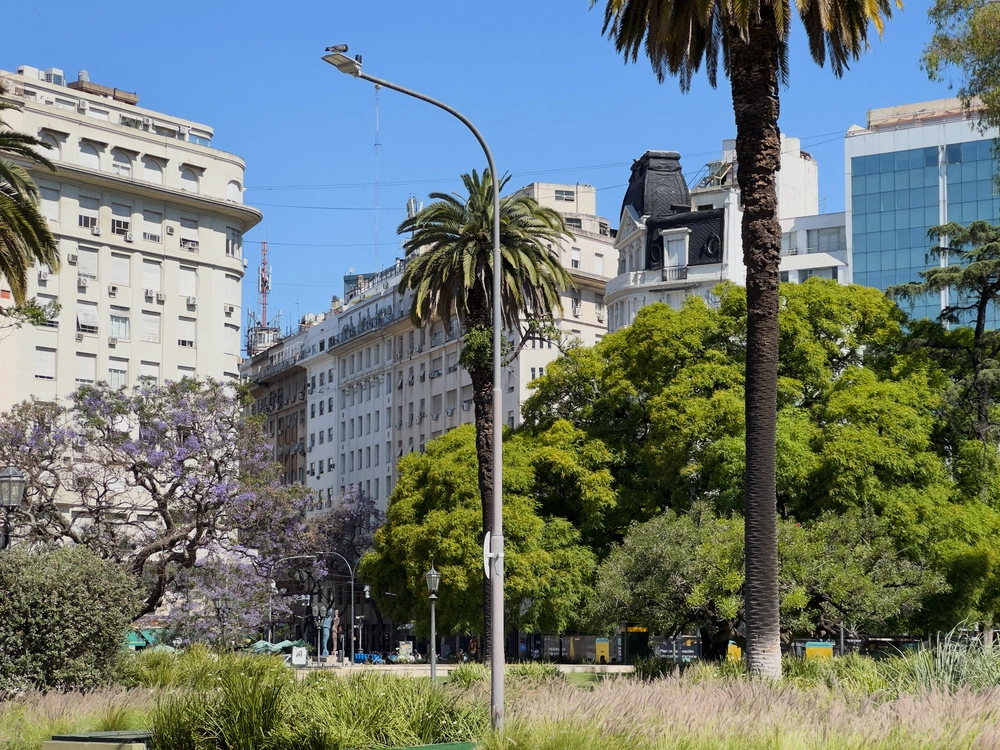
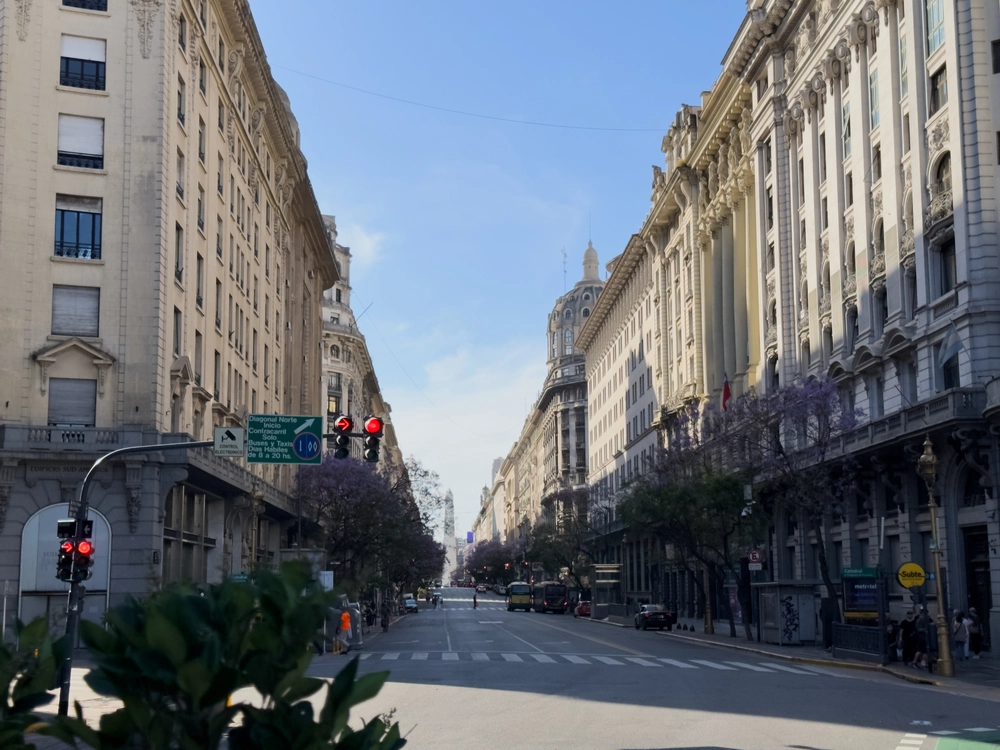
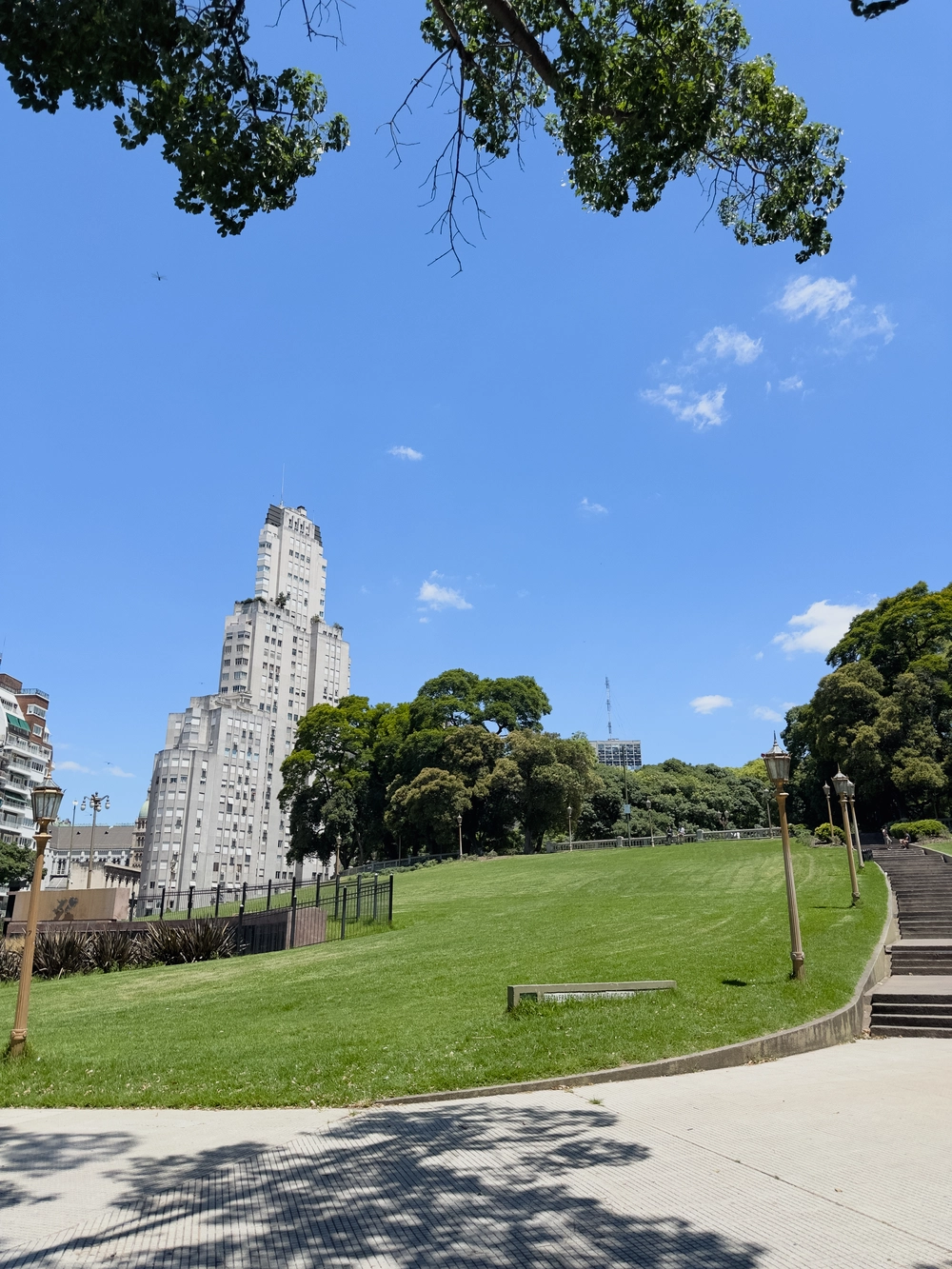
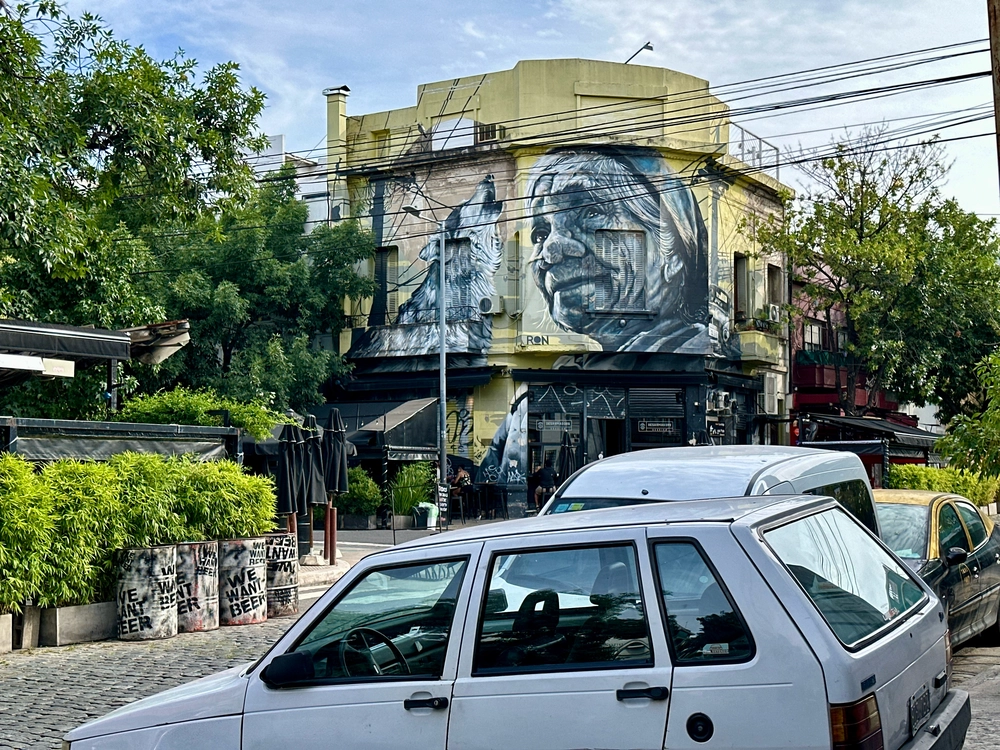
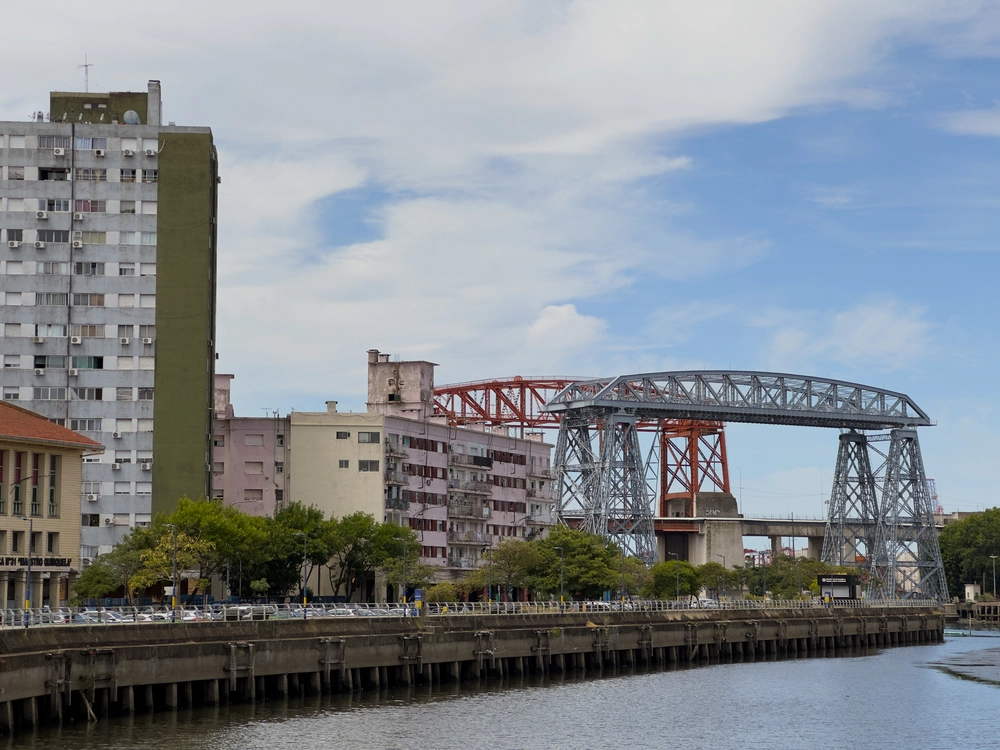
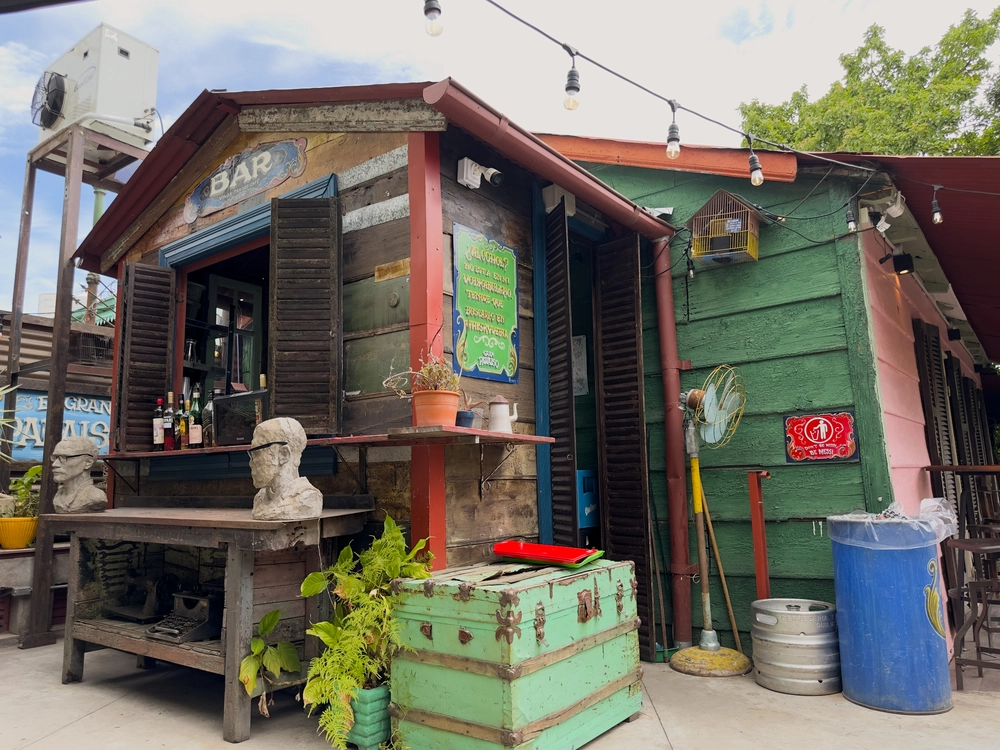
Today is the day for the (much delayed) Argentina post! Last October I packed all my
things into a storage unit in Squamish and set off solo for South America. I spent
three months in Buenos Aires and one month in Bariloche (Northern Patagonia).
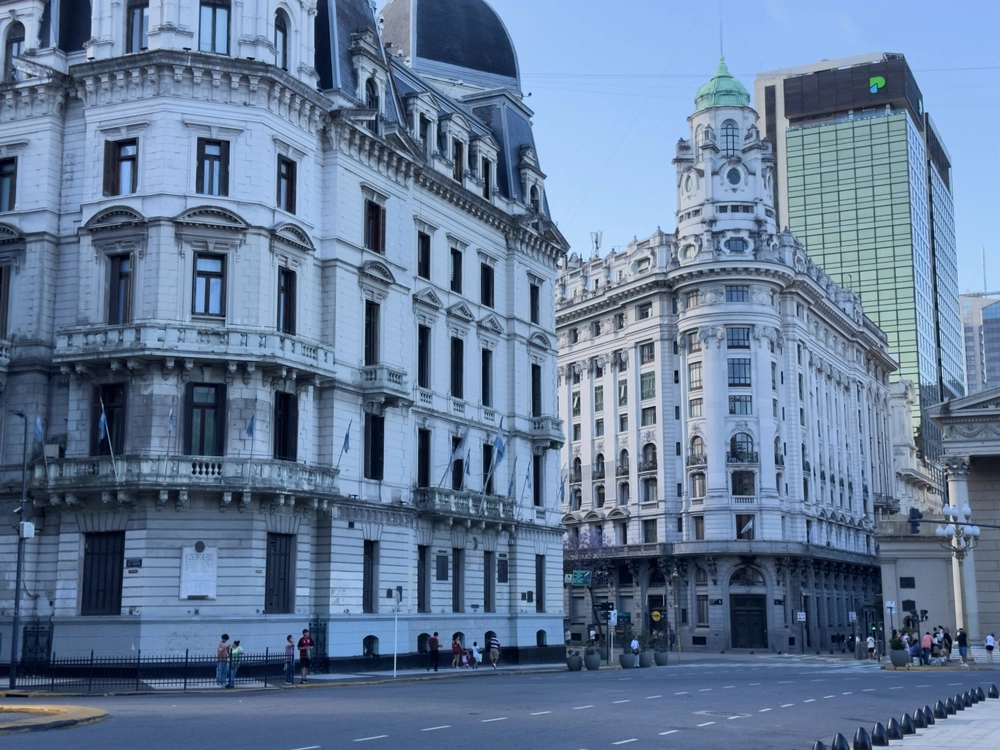
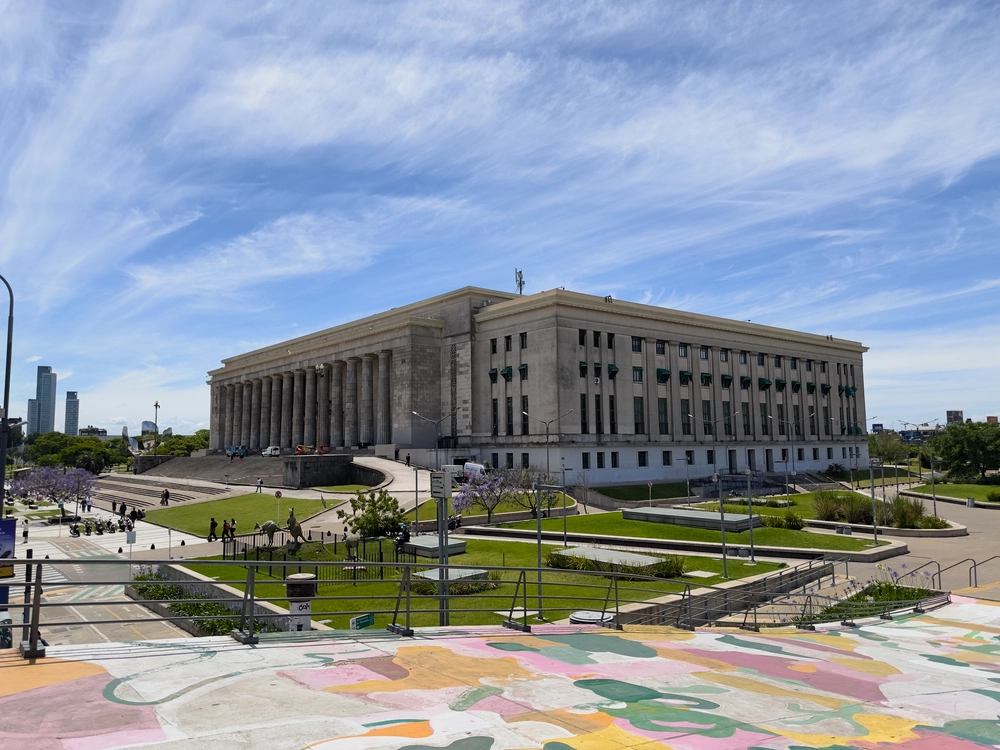
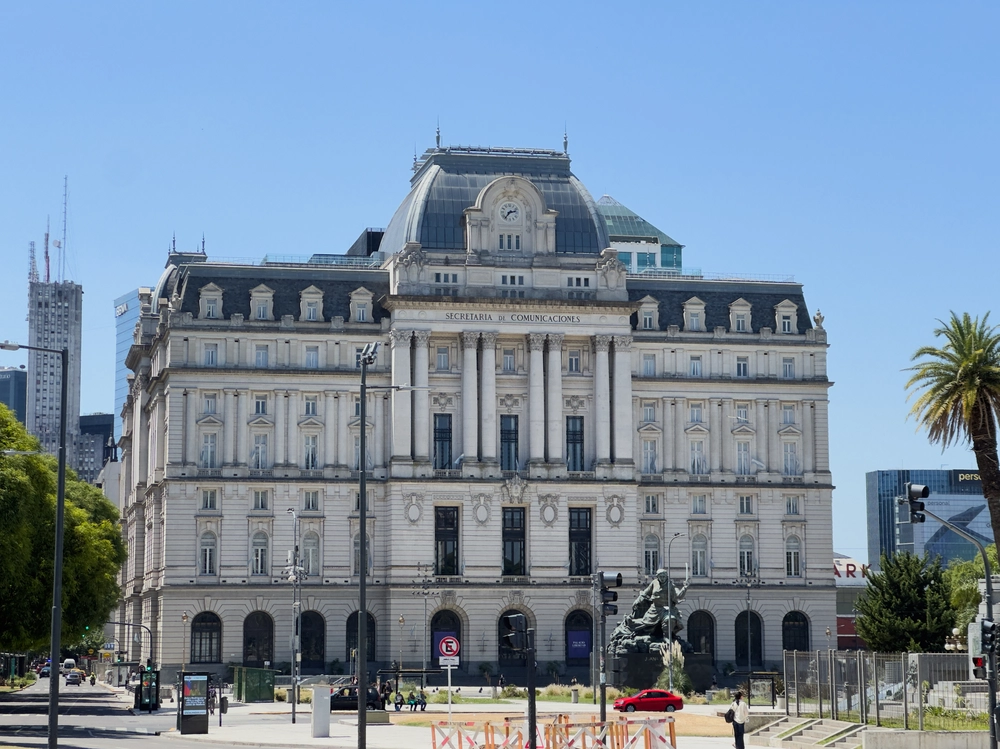
Palacio Libertad. Another cultural center and outwardly my favourite building in the
city. Probably inwardly as well, however I didn't realize that this was a
cultural center and not a government facility until I was researching this post. It
was formerly the central post office, which is why it says 'Secretaría de
Comunicaciones' on the side.
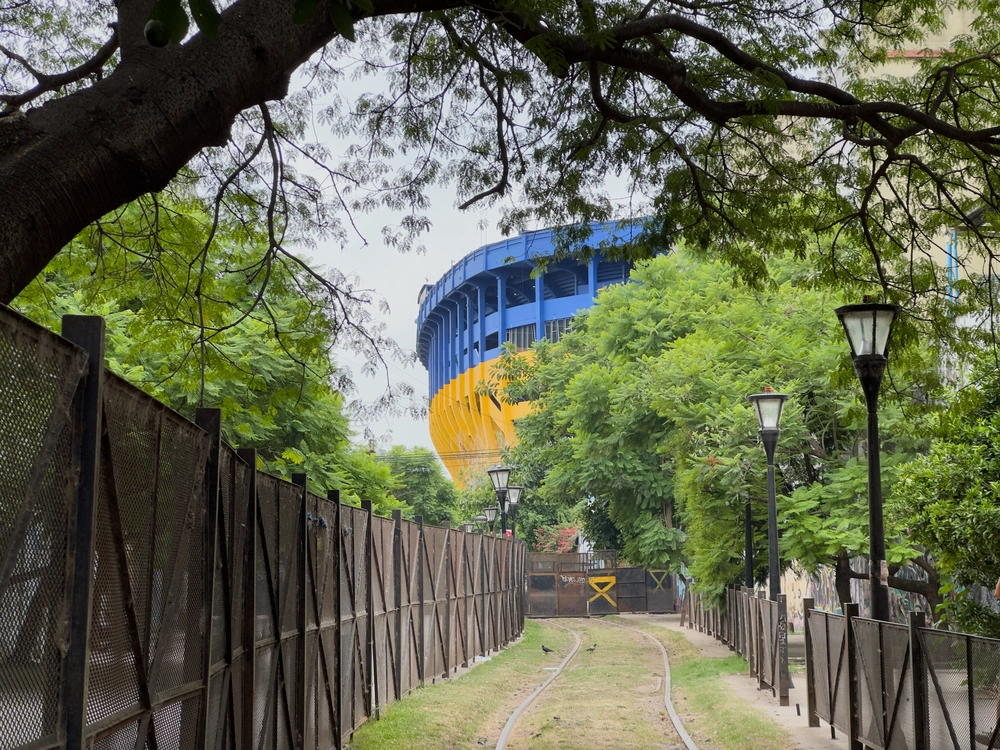
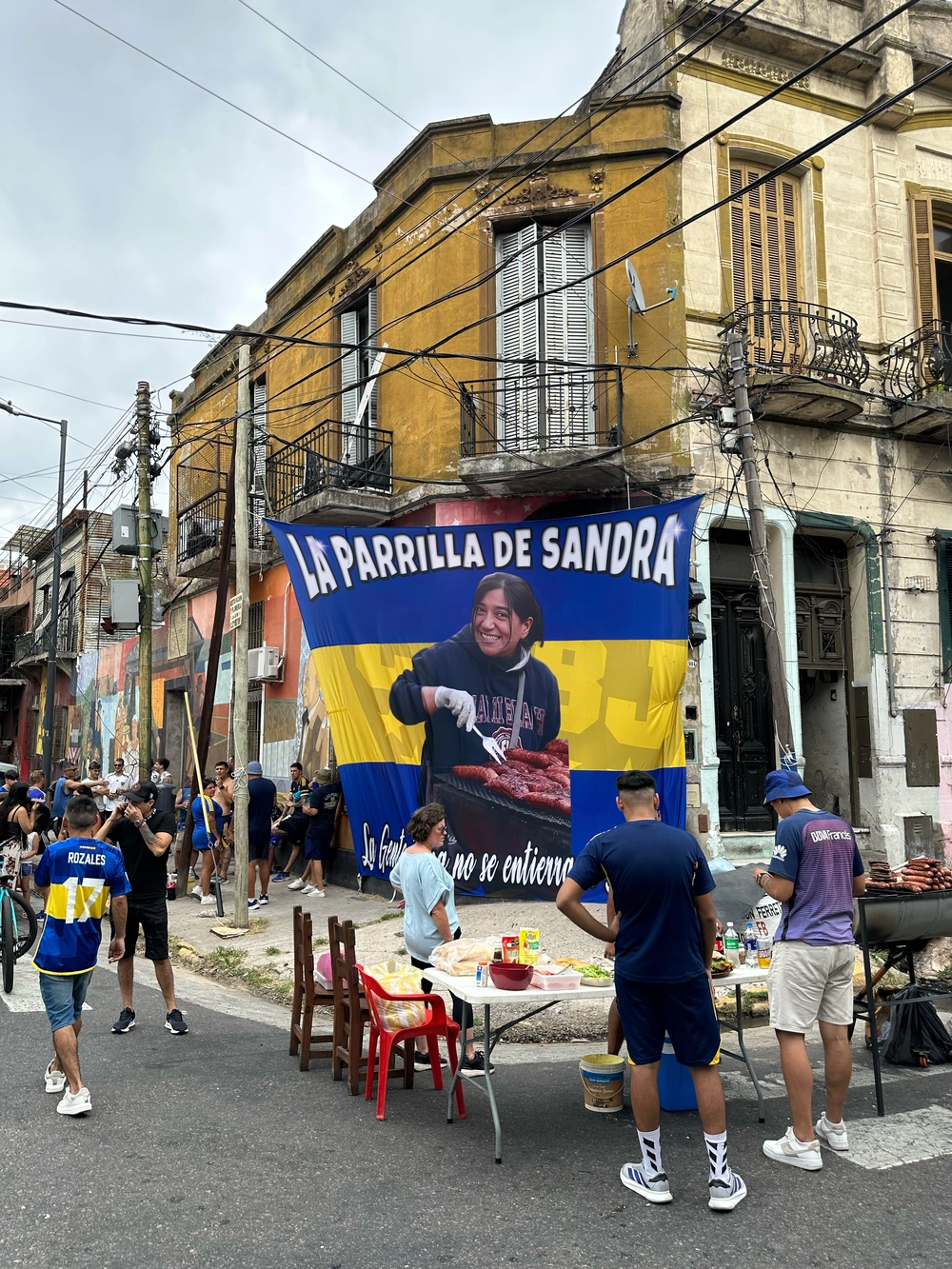
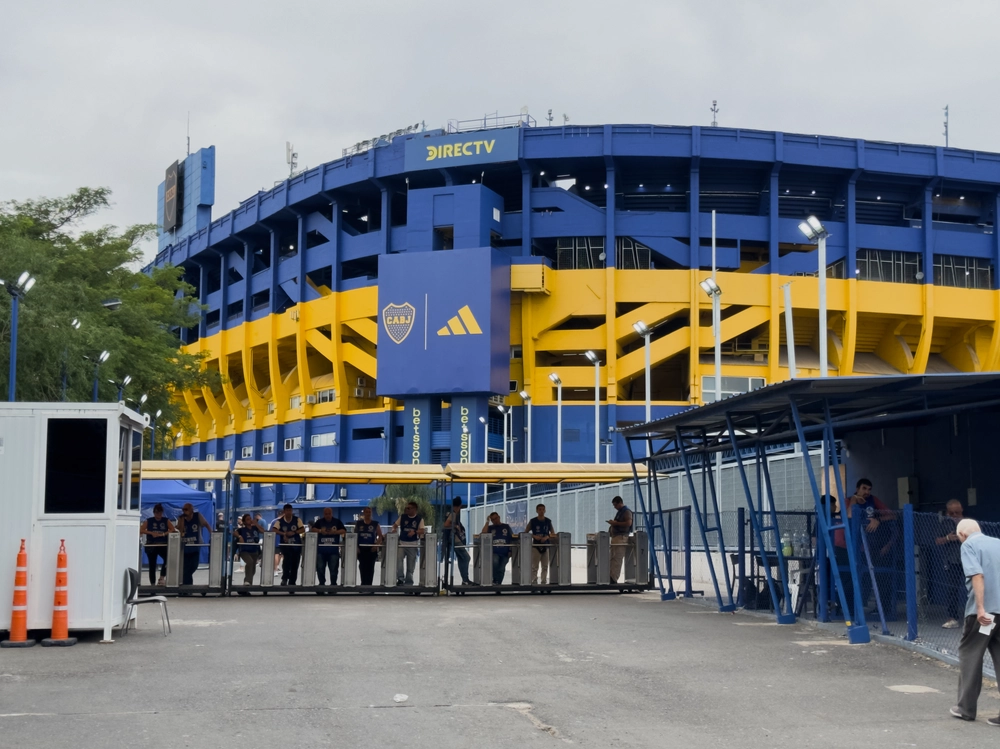
There are two futbol teams that matter in Buenos Aires. River Plate aka Los
Millonarios in the North, and the Boca Juniors in Boca. Boca fans call themselves El
Doce (the twelve), so as a Seahawks fan it was easy to choose my side. Plus, Sandra.
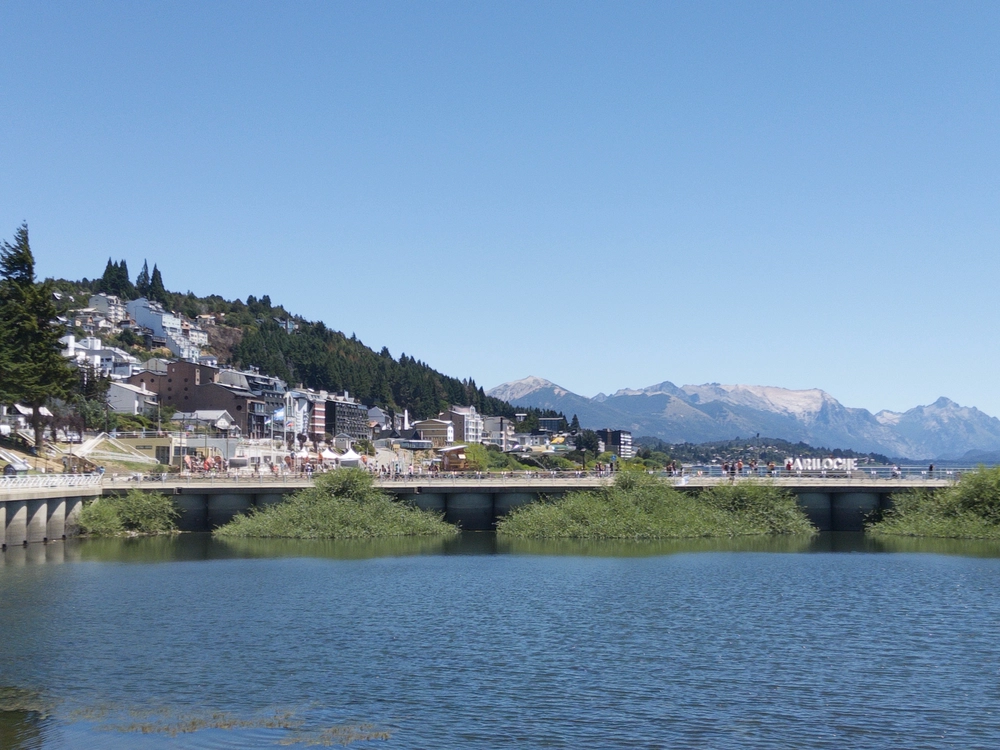
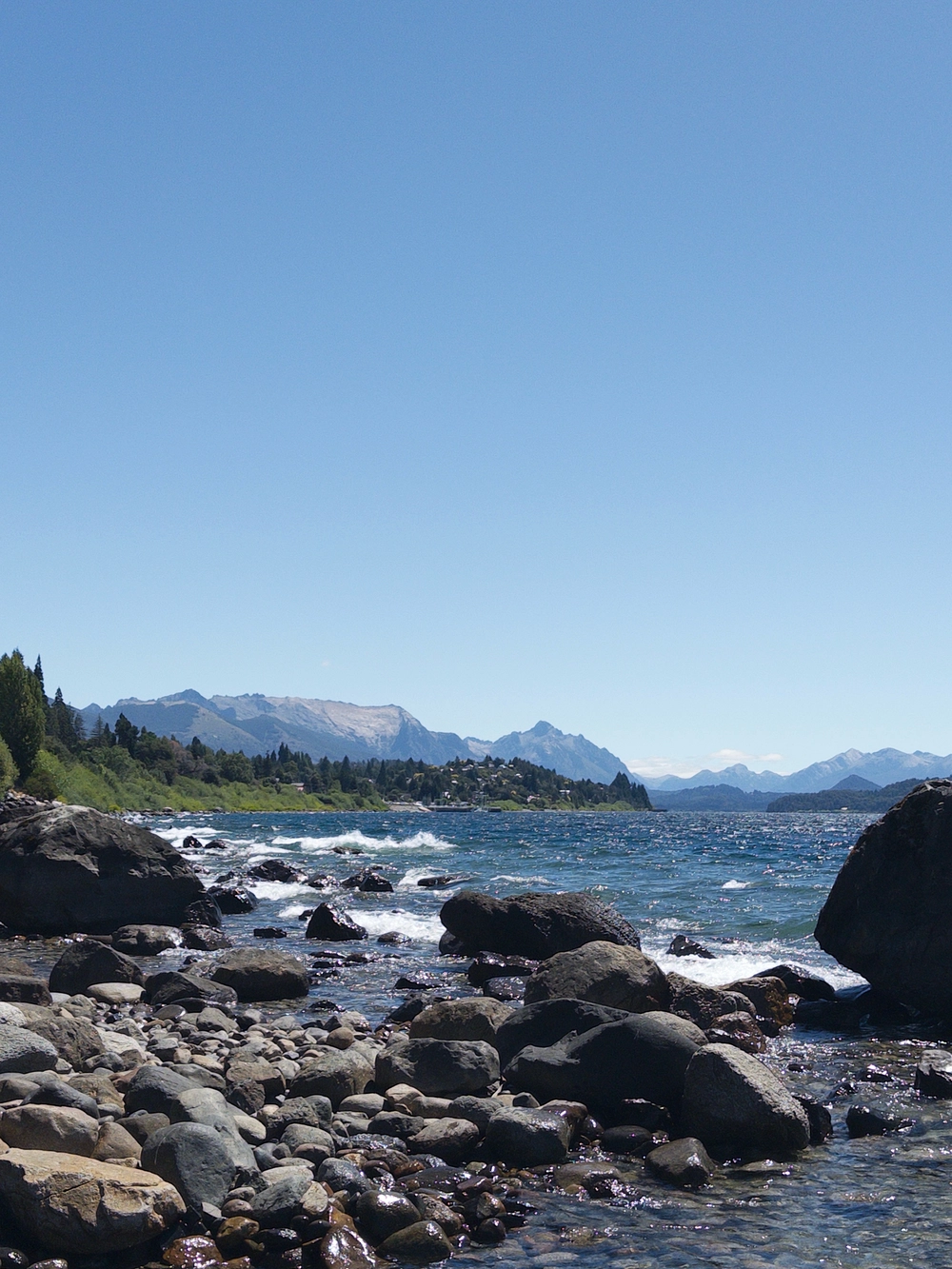
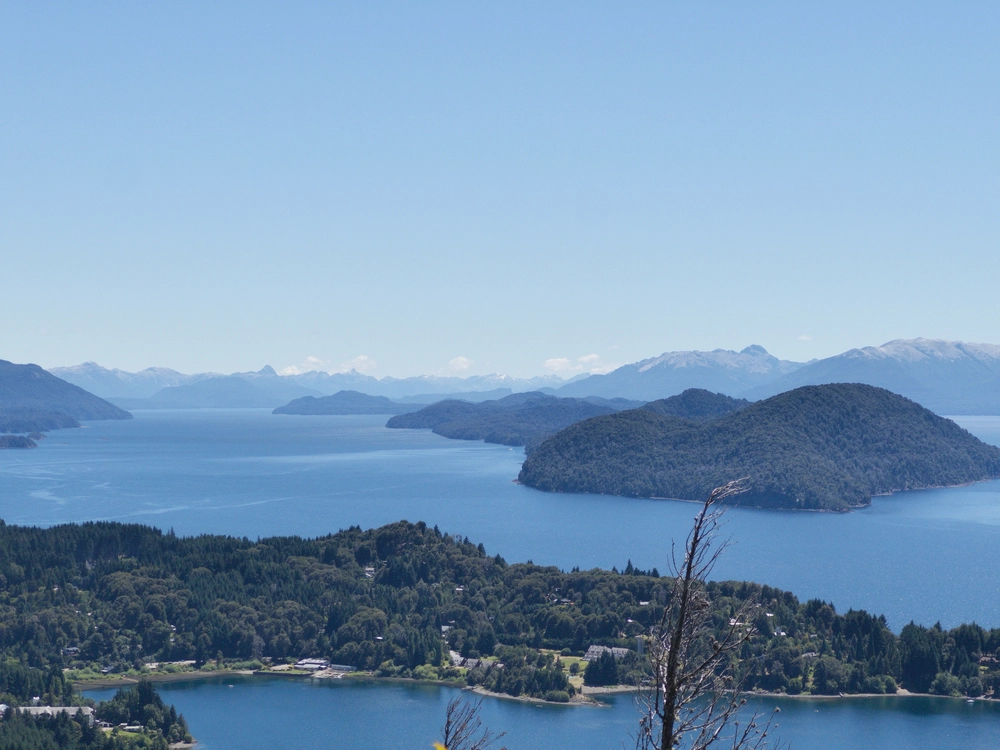
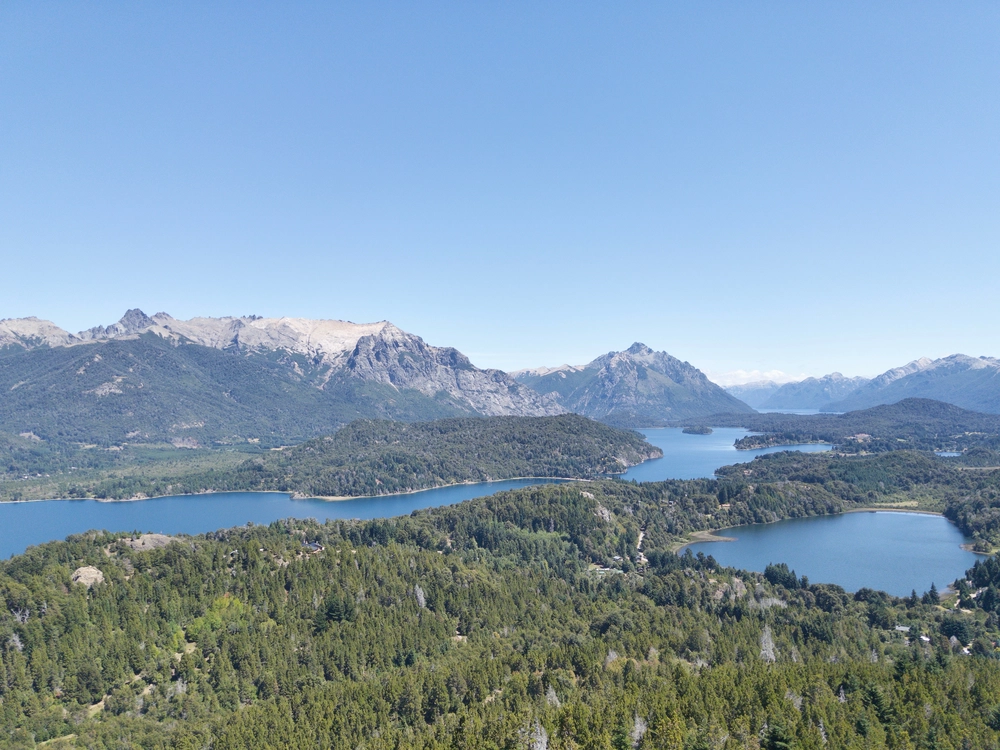
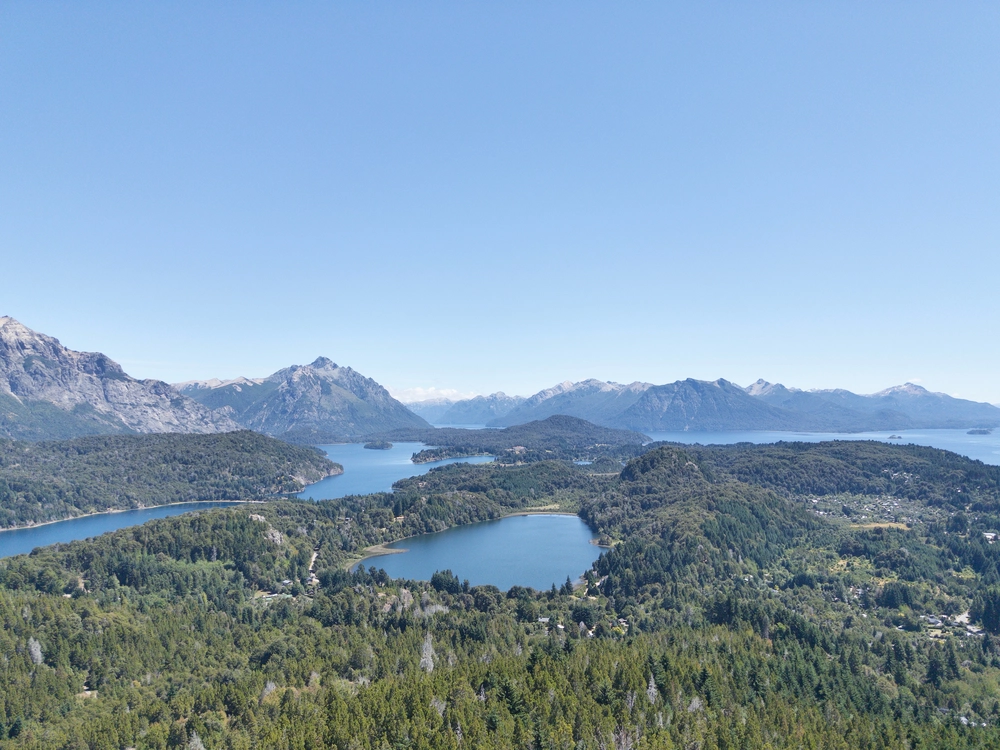
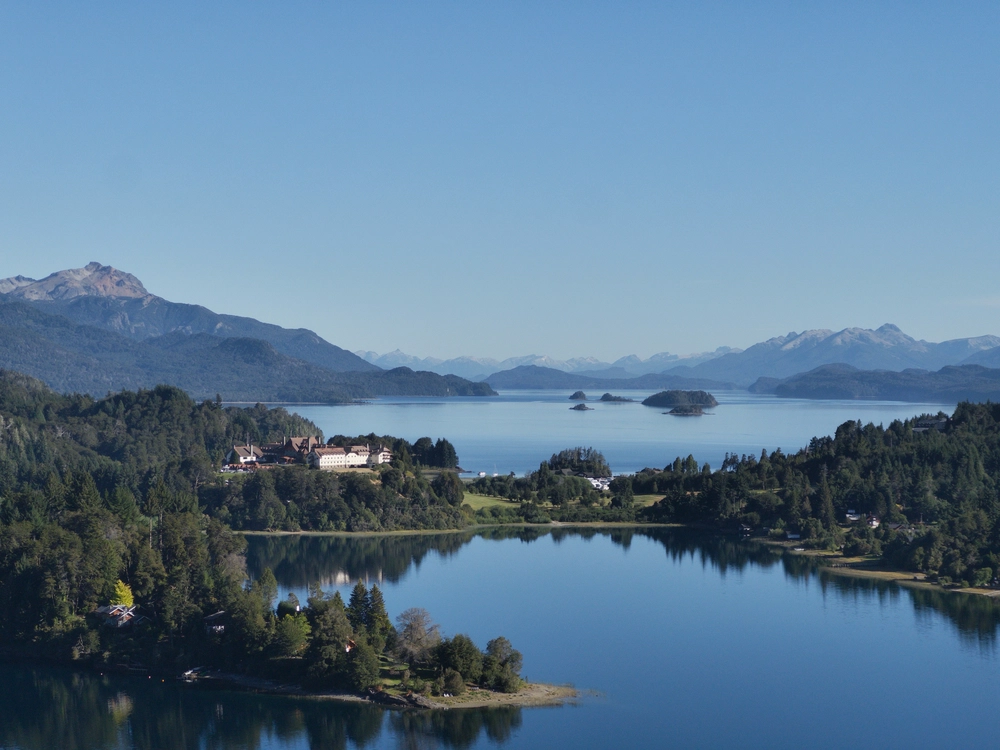
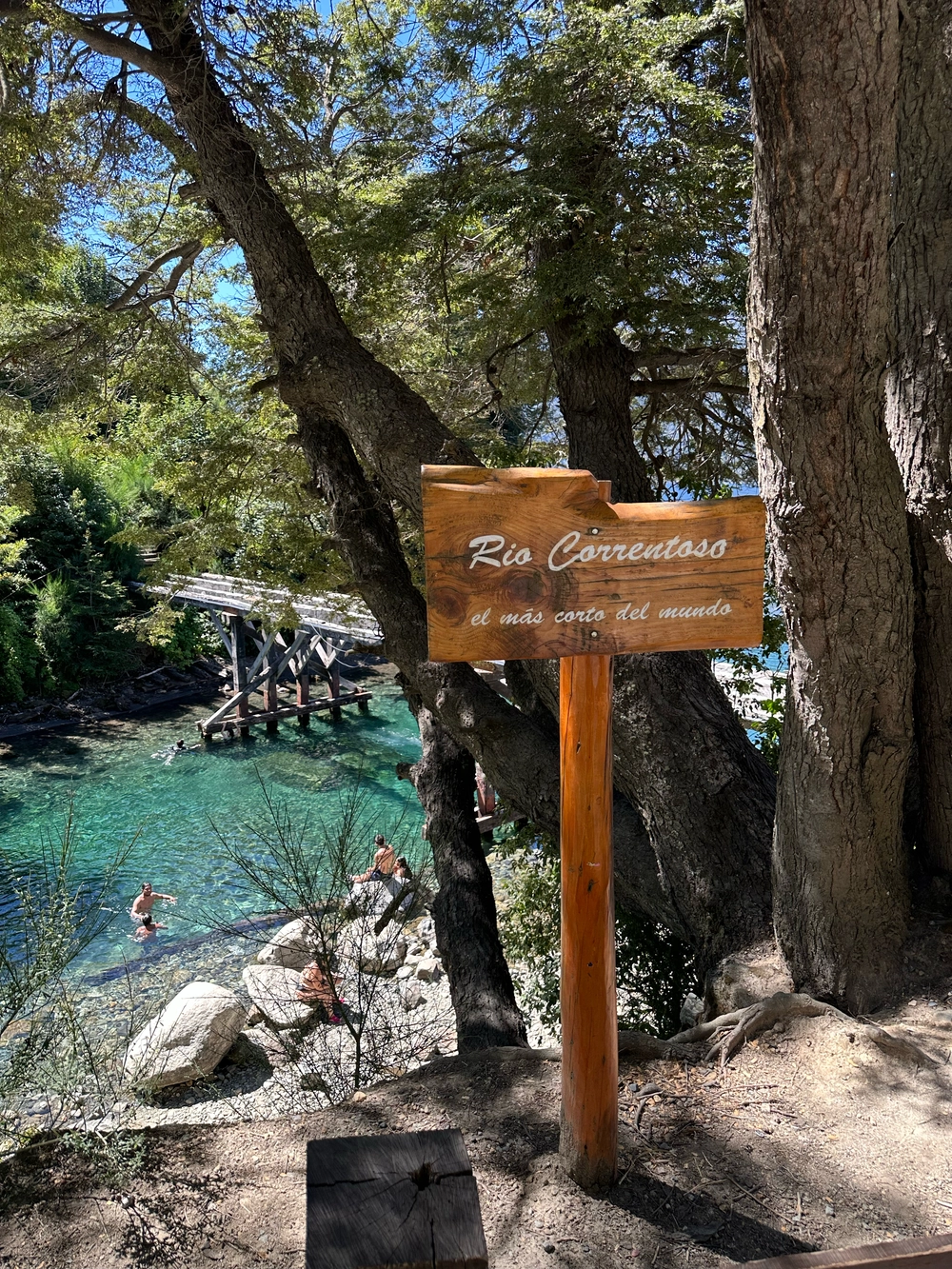
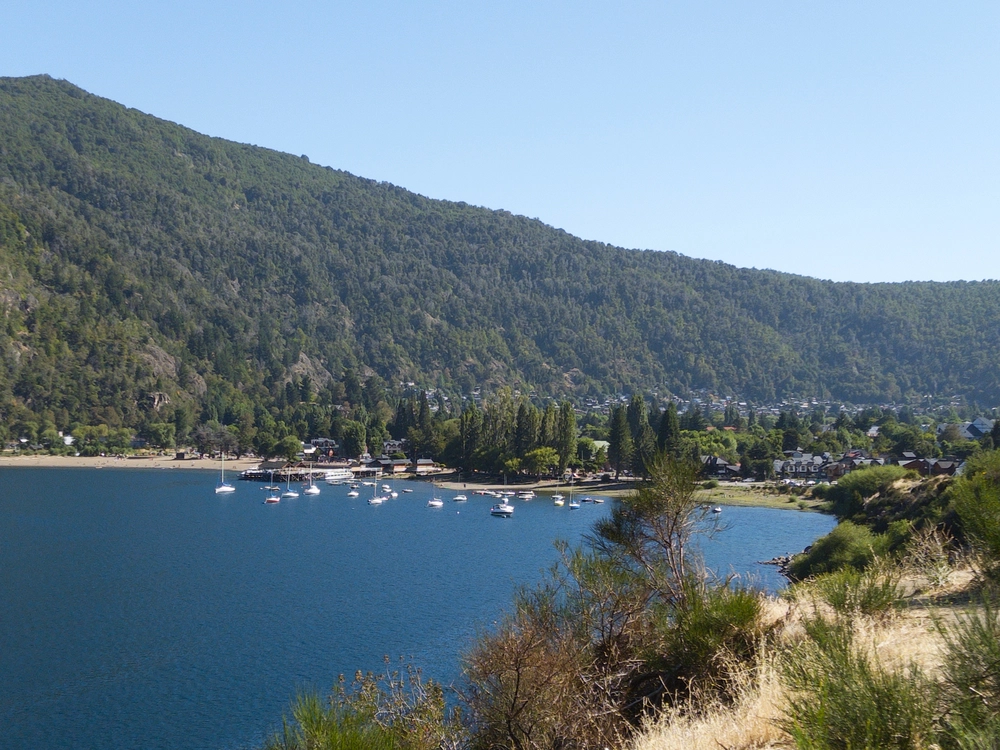
Bariloche is a mountain town in Northern Patagonia. It is home to South
America's largest ski resort, and is a place of great historical mystery and
intrigue. I highly recommend going down the Wikipedia rabbit hole.
I’m a member on an old-school overlanding forum called
Horizons Unlimited
which is full of folks who’ve ridden their motorcycles to every corner of the earth.
When I threw my itinerary for Far West out there to seek advice, one of the old-timers
opened his comment with this:
“I’m having some difficulty imagining your trip as it’ll unfold on the ground.
You’re covering a lot of ground, but don’t appear to be actually
seeing very much, mainly because so much of what’s worth seeing along your
route requires either long side trips, getting off the bike and walking around, or
both.”
I responded to the effect that I knew it was an aggressive itinerary, but three weeks
was all I could pull off and that I’d have to make do. It was a motorcycle trip after
all—shouldn’t that be the main activity?
Ummm, no. Not really.
Lesson 1: Slack
To qualify this a bit:
I still had a blast, and
the somewhat impromptu 3 day hiatus in Palm Springs compressed the riding schedule
to its limit, and I chose this tradeoff knowing it would make the ride more
challenging.
But the wise man was right. I spent a lot of time riding past places that I would have
loved to have spent a day or two exploring. The motorcycling, fun as it is, is not
actually the point. Moreover, I didn’t leave any slack to accommodate unexpected
issues like not realizing my chain was about to snap until I was stuck at the Grand
Canyon. Oh, mistakes were made.
If I subtract the three days in Palm Springs, I covered an average of 380 kilometres
per day. That doesn’t sound like much in the context of four-wheeled road trips, but
they are big days on a bike when you’re avoiding the freeway. My Garmin estimated 5-7
hours in the saddle most days, and that’s before you factor in a fuel stop or two,
lunch, points of interest, trying and failing to find a god-damn banana over and over
again, and coffee breaks. There is also hard work involved—packing and loading the
bike, setting up and tearing down camp where applicable, bike maintenance, sitting
around in laundromats, on and on. It was easily 10 hours of logistics each day.
Sustainable for three weeks with a good break in the middle, but I wouldn’t do it this
way again.
On the next trip, I will cut the target mileage-to-time ratio in half. 200 km per day
average on an asphalt trip, less if aiming for dirt, which is the other thing I would
have done more of if I had had a more relaxed time budget. If you’re using this as a
guide it’s important to note that these are overall averages, but I would aim to ride
only 4 or 5 days each week, so the actual mileage on a riding day would be higher.
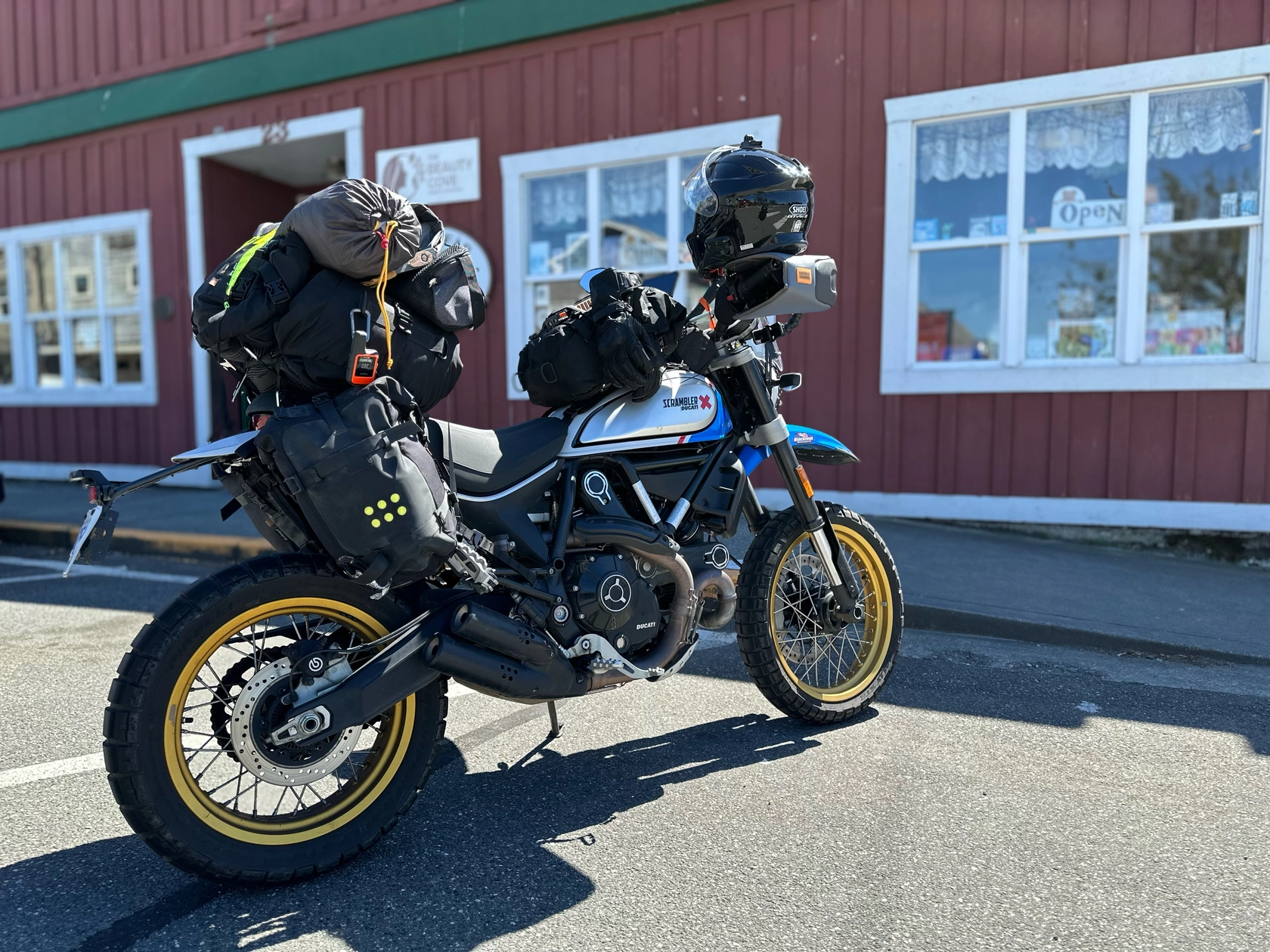
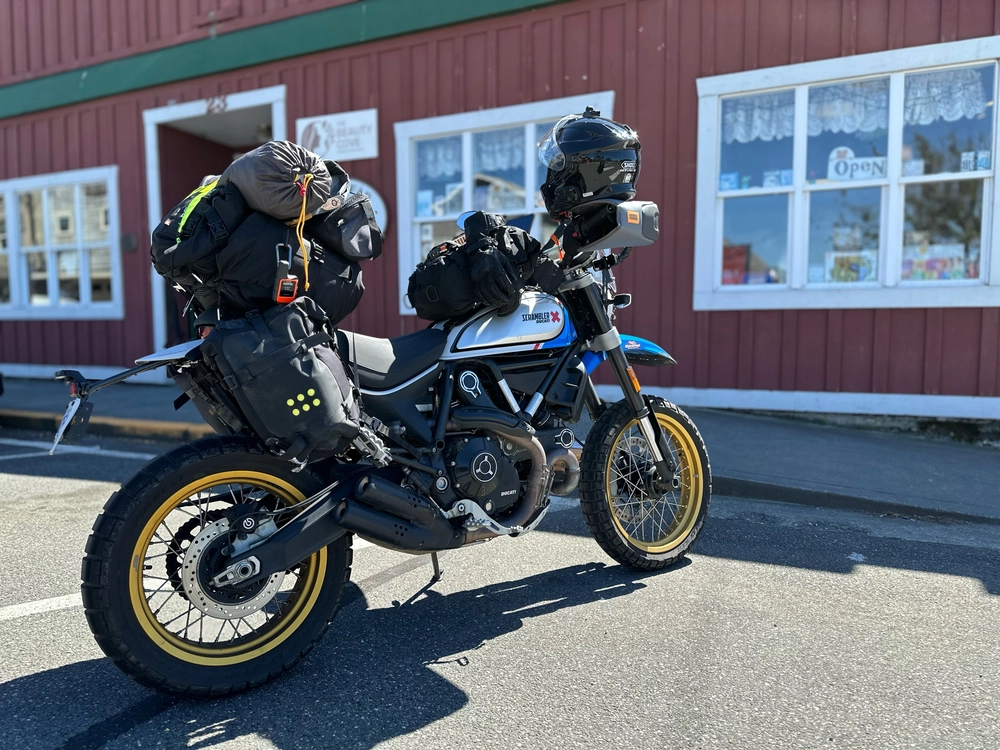
Lucia on day one, packed with gear.
Lucia on day one. The tail bag setup was tilted too far forward but I got it sorted
for day two.
This all worked out okay. I can’t say enough about how solid Kriega bags are, and the
best idea I had was to stick a mountain bike handlebar bag on the bars as a quick
stash for random stuff like ferry tickets, GoPro batteries, cash/change, and ear
plugs.
Next time I will look to swap out the 12 litre side saddles with the 18 litre variants
that mount to the same base, as that is free real estate as far as the ride goes. I
will scrap either the 10 litre or 20 litre tail/tank bag in favour of a 9 litre Kriega
backpack. There is value in keeping your most important possessions on your person,
and a camera mount on the shoulder strap would have been perfect.
The shoe situation was pretty dumb. I ended up bringing mid-top Arc’Teryx hiking
boots, but I will invest in a more versatile and less bulky pair of all-purpose
trekking shoes on the next trip. I felt quite goofy wearing hiking boots while eating
a $55 scallop risotto in Palm Springs when we went out for a nice dinner.
Other minor adjustments I would make:
More compact and better quality cookware;
Smaller fuel canister;
Small size, leak proof containers for oil, spices, etc;
Don’t need a roll of toilet paper unless you’re truly wild camping—a funeral-sized
Kleenex pack will get you out of a bad situation;
Rope? Come on. I literally brought 90 feet of rope. What the actual fuck did I think
I was going to need 90 feet of rope for;
Jeans are needlessly bulky and heavy—I’d probably go with a lightweight, versatile
pant;
iPad wasn’t needed since I had a laptop and a kindle already;
I’m still not sure about the hatchet. I only lit one fire, but it was nice to have
the option, and there’s something about having one in parts unknown that makes you
feel safer.
One thing I found hilarious when packing so tightly was how quickly I came to treasure
single serve items like a good napkin stack or zip-lock bag. These can only be bought
in household size packs which aren’t so helpful when you just need, like, one.
As for parts and tools, I made the boneheaded assumption that, America being America,
I could buy what I needed if, when and where I needed it. Not the case. Not when
you’re up against the clock (see previous section).
While I had the basic set of tools, what I ultimately needed and didn’t have was a
socket wrench pair large enough for the wheel axle (needed to adjust chain tension),
and a spare chain. I will be adding those to my toolkit and bringing spares for all
bike-specific, consumable/breakable/bendable parts next time (chain, brake pads, oil
filter, air filter, shift lever, brake levers and clutch lever). It also goes without
saying that I won’t ever again start a 7,000 km trip on a chain that’s almost EOL. As
I said—boneheaded.
Lesson 3: The world is immense
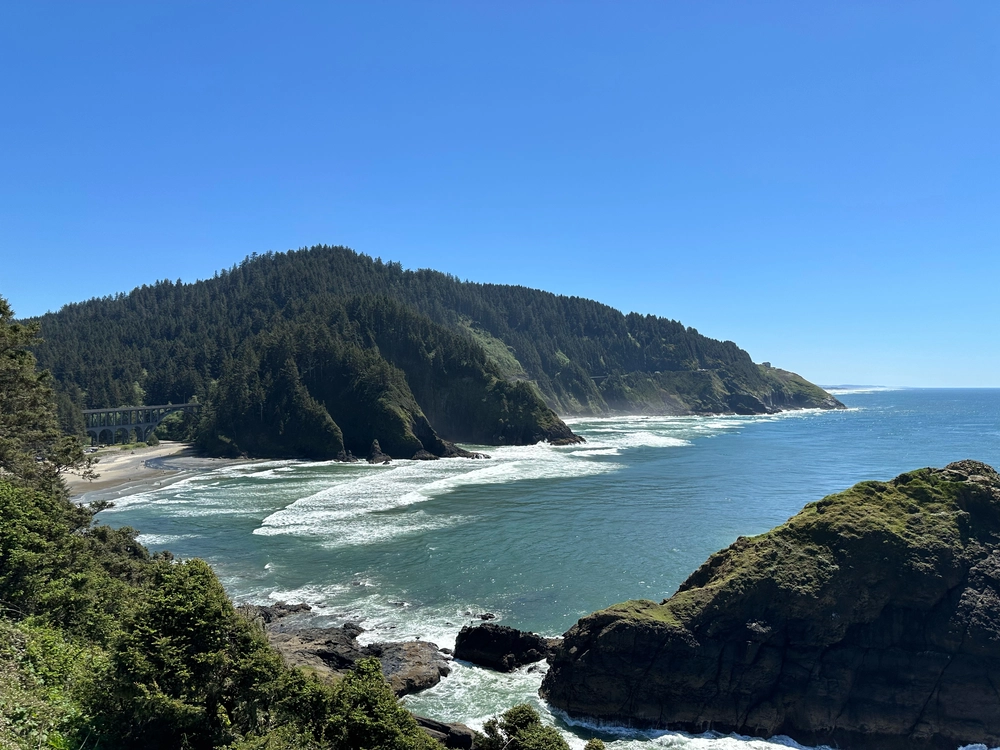
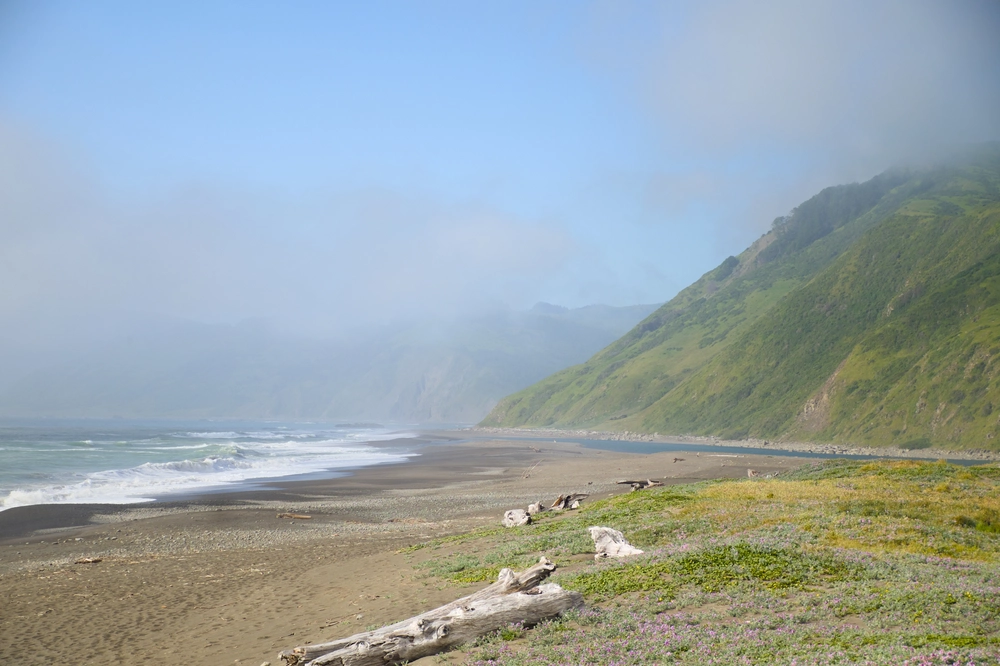
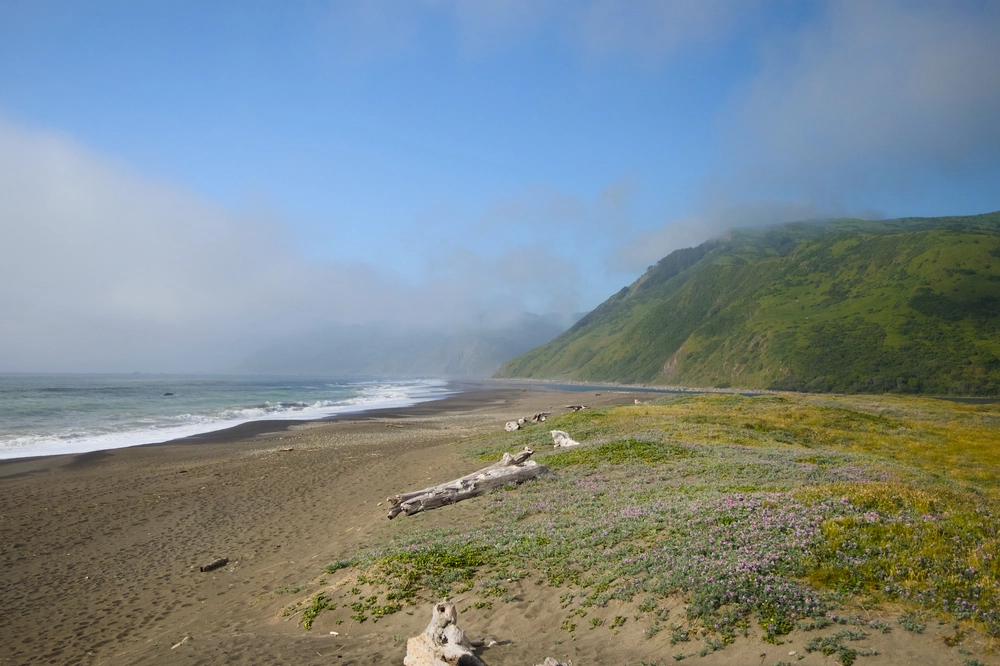
I did some things badly. But I did a lot of things well. I climbed a sketchy hill
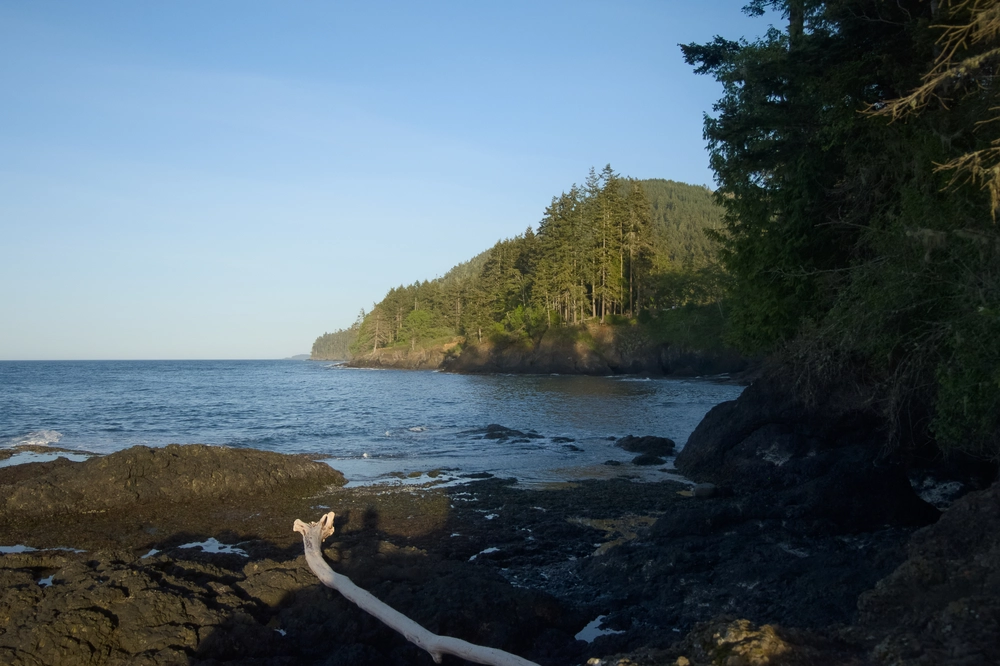
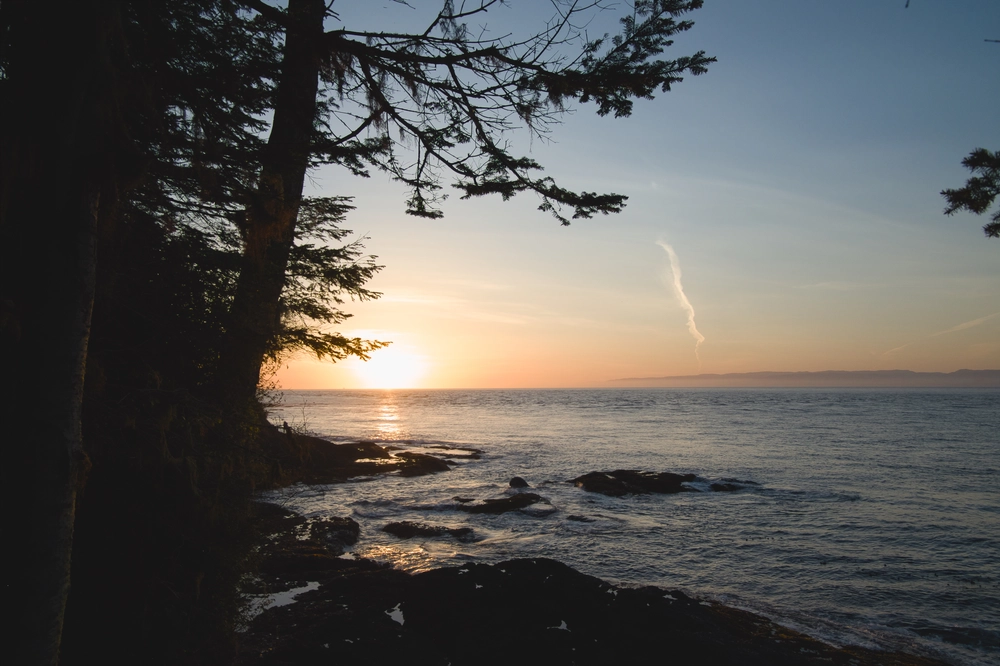
above a lighthouse to get a proper view of the mighty Oregon coastline. I found my
favourite place in the world at the northern trailhead of California’s Lost Coast. I
rode the Pacific Highway to Santa Monica and got to see it in all its splendor before
the terrible fires took so much from the people there this week. I split lanes on the
freeway in Los Angeles and off-roaded in the Arizona desert. I took a 6-hour roundtrip
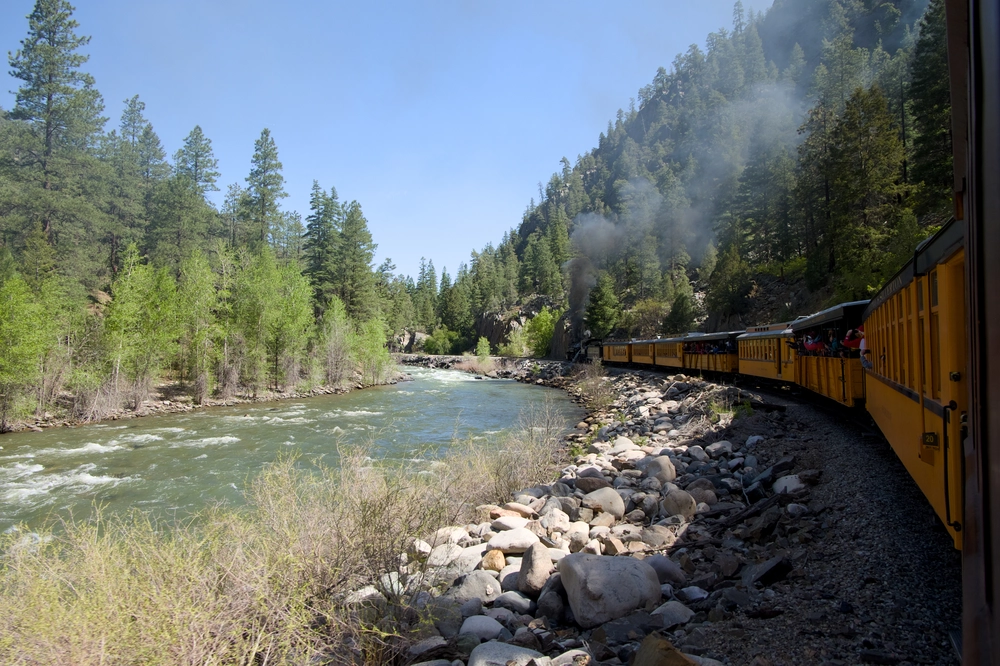
train ride on the oldest operational steam engine in America. I rode on the Million
Dollar Highway in Colorado, through a 1 in 150 year Mormon Cricket swarm in Utah, and
through hail in Wyoming. I had the time of my life, so far.
Ted Simon, in his 1979 book Jupiter’s Travels, wrote this about motorcycle
travel:
“In spite of wars and tourism and pictures by satellite, the world is just the same
size it ever was. It is awesome to think how much of it I will never see. It is not
a trick to go round these days, you can pay a lot of money and fly round it nonstop
in less than forty-eight hours, but to know it, to smell it and feel it between your
toes you have to crawl. There is no other way. Not flying, not floating. You have to
stay on the ground and swallow the bugs as you go. Then the world is immense.”
Travelling this way, you don’t have the option to grab a coffee for the road. You get
it to stay, and you sit with the locals in their favourite cafes, and you take it
slow. They come talk to you because everyone is curious where you’re going and how far
you’ve come. None of the smells pass you by.
Language learning is not something that comes easy to me. My default learning style is
to seek out concepts, rules and frameworks, and I’m relatively bad at domains that
require a lot of rote memorization and reps. The two that come to mind in that
category are language and mathematics, though I’m somewhat passionate about both, in
spite of—or perhaps because of—their elusiveness.
I’ve had an on- and off-again relationship with the Spanish language. I took elective
classes in High School, set it aside through my 20s, and then in more recent years
spent two consecutive winters in Mexico. I leaned on the basic structural knowledge I
had during those immersive stints, but my learning was passive. I can get by just fine
in a restaurant, but I never seriously set about becoming fluent. I made some measure
of progress in expressing myself, but I didn’t have the vocabulary base to reliably
pick out words and phrases when spoken at the natural pace of a native speaker.
I’ve changed my approach to learning the language this year, and I think I’ve found
two complementary tools that work for me. Neither of them are duolingo. Both are based
on spaced repetition, which I now recognize is the way to memorize anything.
Spaced repetition is an evidence-based learning technique that is usually performed
with flashcards. Newly introduced and more difficult flashcards are shown more
frequently, while older and less difficult flashcards are shown less frequently in
order to exploit the psychological spacing effect. The use of spaced repetition has
been proven to increase the rate of learning.
Anki
There are all sorts of ways to go about this, ranging from hand-written notes to
enshittified SAAS offerings. For my money, there is nothing better than
Anki. I will die for Anki.
Anki is a power tool that requires a little bit of elbow grease to become productive
with. It offers a lot of settings which can be overwhelming, however it has sane
defaults to get you started, and the documentation is excellent.
Here are the two community-made card decks that have become foundational for me:
Spanish 9000 Sentences
contains, well, 9000 spanish phrases along with native audio samples for each. It’s
a ‘cloze’ type card, which presents each phrase in Spanish on the front of the card
and makes you fill in the missing word. The front might say something like
Eso [...] muy bueno. (That would be great.), and the back would say
Eso sería muy bueno. along with a spoken audio track. There are 9000 of
these ranked and sorted by difficulty. Seriously.
Ultimate Spanish Conjugation
contains full conjugations for 72 of the most important verbs (approximately 59
cards per verb). This one comes with a
comprehensive manual
for how to use it optimally, which I highly recommend internalizing before getting
started.
In addition to these, I also have built out a few decks of my own. Google Translate
allows you to export your translation history into a CSV file, which can be imported
into Anki. For short, collected phrases like these, I like to use a ‘Type in the
answer’ card type to force me to learn the correct spelling, including accents and
correct gendering which often can fall aside if you’re just doing pure mental checks
in your head.
I’ve also had great success using an LLM to create supplemental cards for knowledge
gaps. When you take beginner language classes, you learn all sorts of important
vocabularly, like colours, body parts, rooms in the house, telling time, numbers, etc.
that tends to get skipped over by the above methods and often as well in real-world
immersion. I asked ChatGPT to prepare me several hundred cards containing words and
phrases that would typically be covered in beginner or intermediate spanish classes,
and it performed very well on that task. This is one of those few genuinely useful
applications of that technology.
Pimsleur
Spaced repetition flash cards are great for memorizing, but the other side of the coin
is applying that knowledge, by which I mean speaking and listening. I’ve tried
in-person classes several times now, and they’ve never worked very well for me.
Typically, you’re talking with other beginner speakers who aren’t able to correct you,
and who themselves don’t speak the language well, so you aren’t able to train your ear
either.
Language exchange meetups are fantastic, but they require a certain level of
competency before they become an option.
So how do you practice speaking and listening, short of moving to a Latin American
country? For me, nothing beats the old-school
Pimsleur Audiobooks. These are also based on spaced repetition, and force you to quickly synthesize
responses within hypothetical conversations, closely mimicking real-world experience.
Each day you’ll do a 30-minute session where you’ll be speaking, out loud. It’s very
effective.
Pimsleur has been around for a long time, and has grown from audiobooks into a more
comprehensive app-based offering. I don’t see a lot of value in the other app
features, especially as I’m supplementing this with intensive flash card learning.
It’s hard to find on their website, but they offer an audio-only subscription (linked
above) that is marginally cheaper than the full app experience, and it cuts out a lot
of the cruft. There are also other ways to acquire audiobooks, if you know what I
mean.
All told, I spend ~30 minutes per day on a Pimsleur audio-lesson, and another 15-20
minutes reviewing flash cards. Combining these methods is a pragmatic, practice-based
approach to learning, and is in stark contrast to the academic approach of reading
textbooks and completing exercises. Once you embrace it, you may never look back.
Bonus: Cheatsheets
SpanishDictionary.com has an
absurdly overpriced subscription tier which gives you access to a collection of
excellent PDF-based cheatsheets and reference material. I’ve found the verb
conjugation reference valuable as a supplement to the flash cards described above. You
can sign up for a free trial, download all the PDF cheat sheets, then cancel.
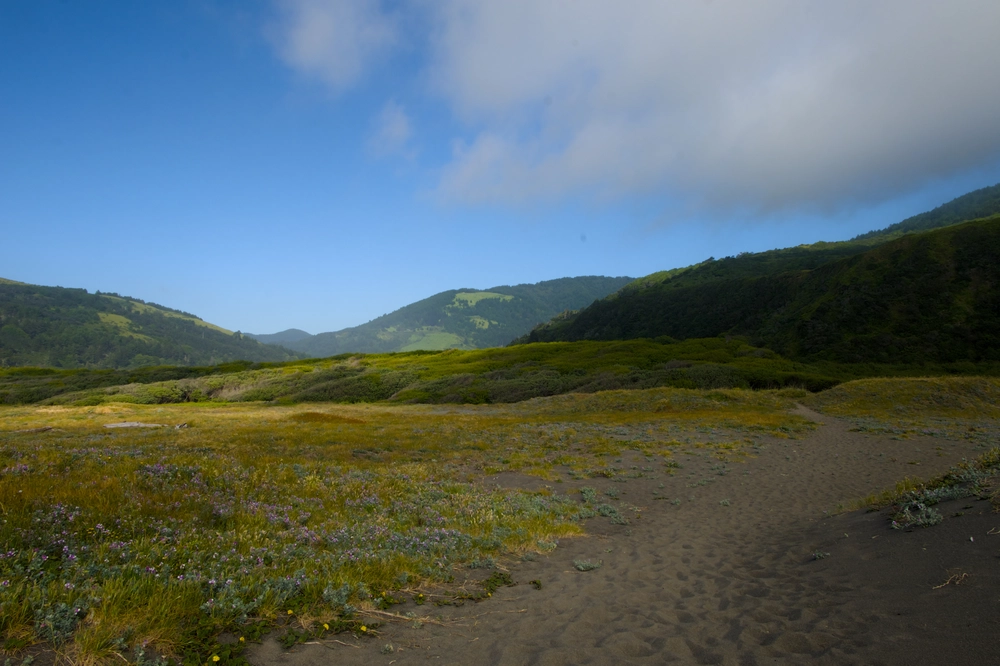
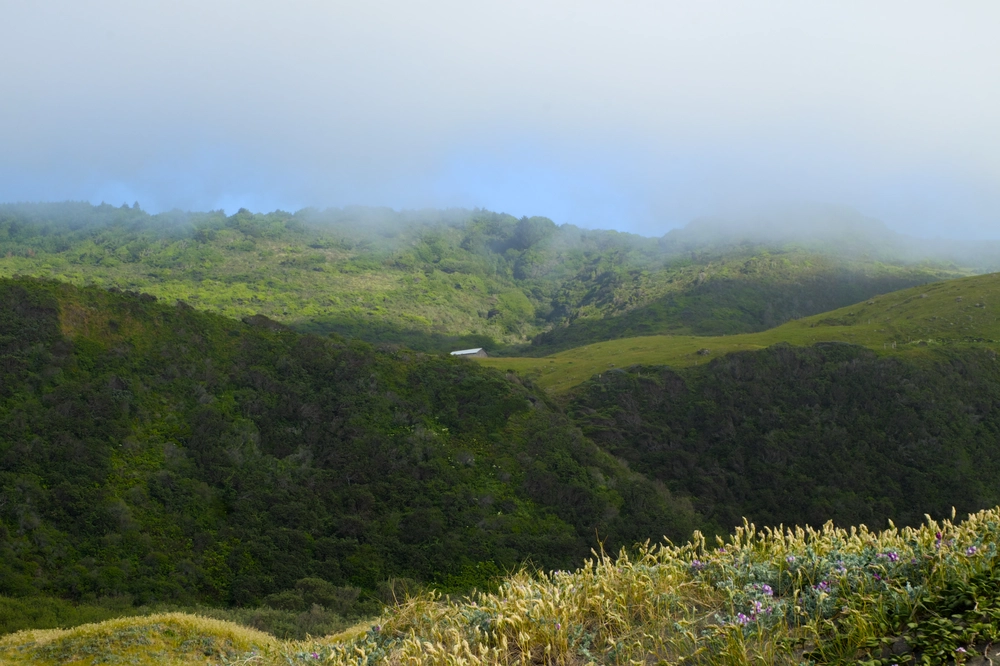
A few days before I departed, I purchased a used FUJIFILM X-T10 camera to try to learn
some photography basics and document the trip. The slower pace this afforded as I
occasionally stopped to compose a scene was worth it alone.
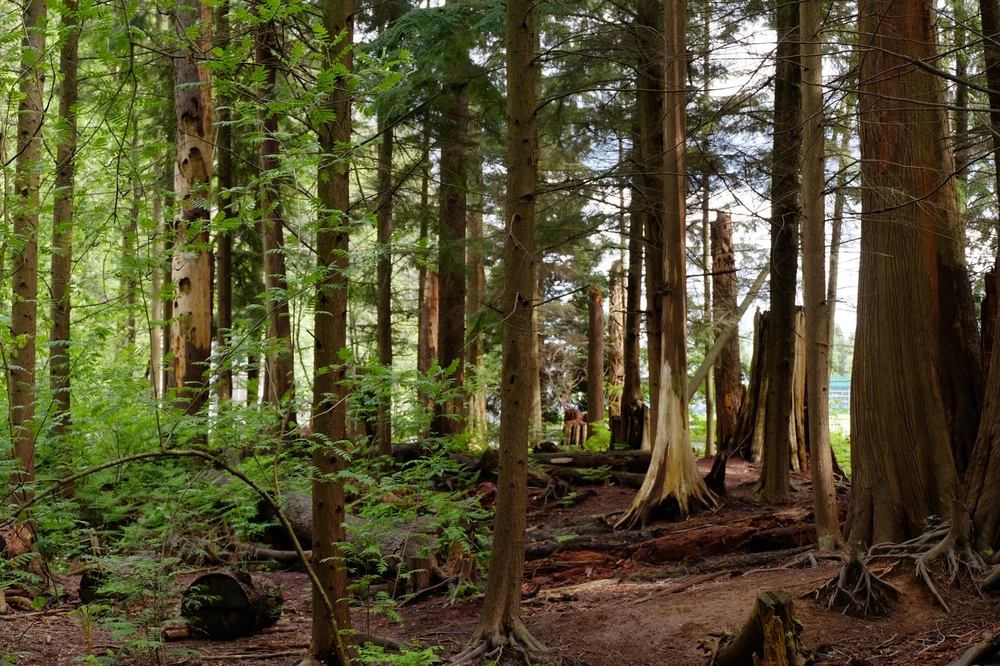
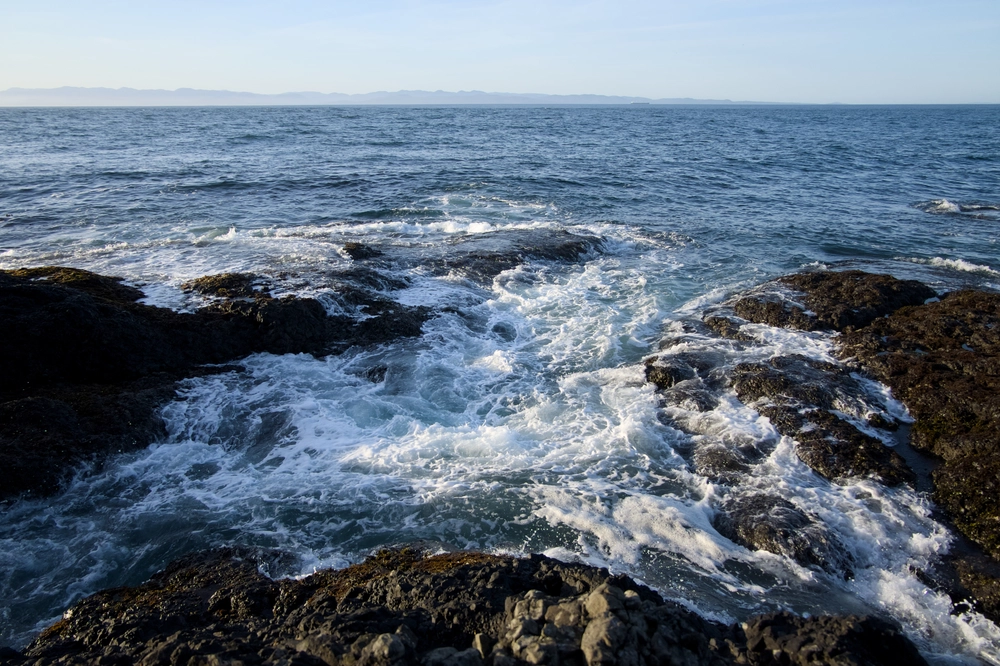
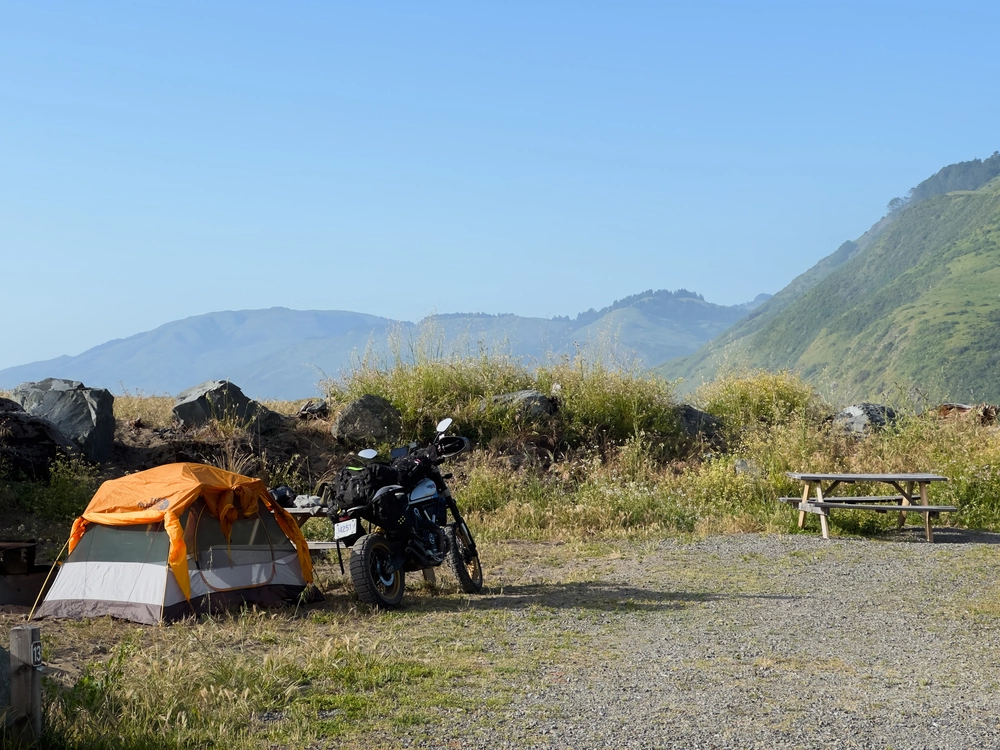
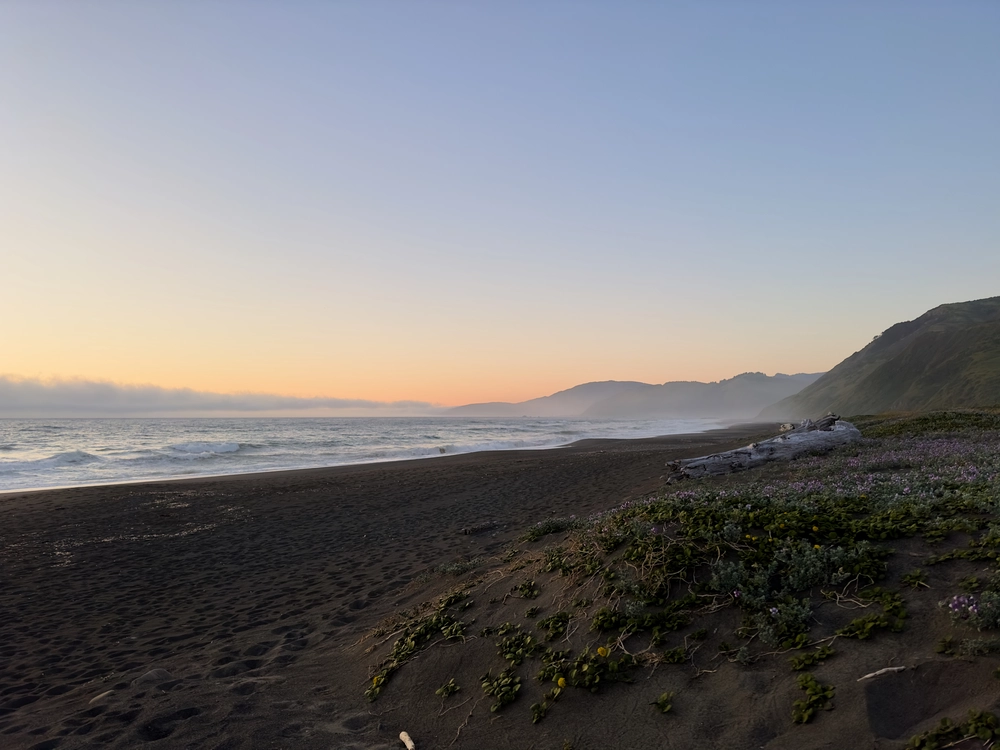
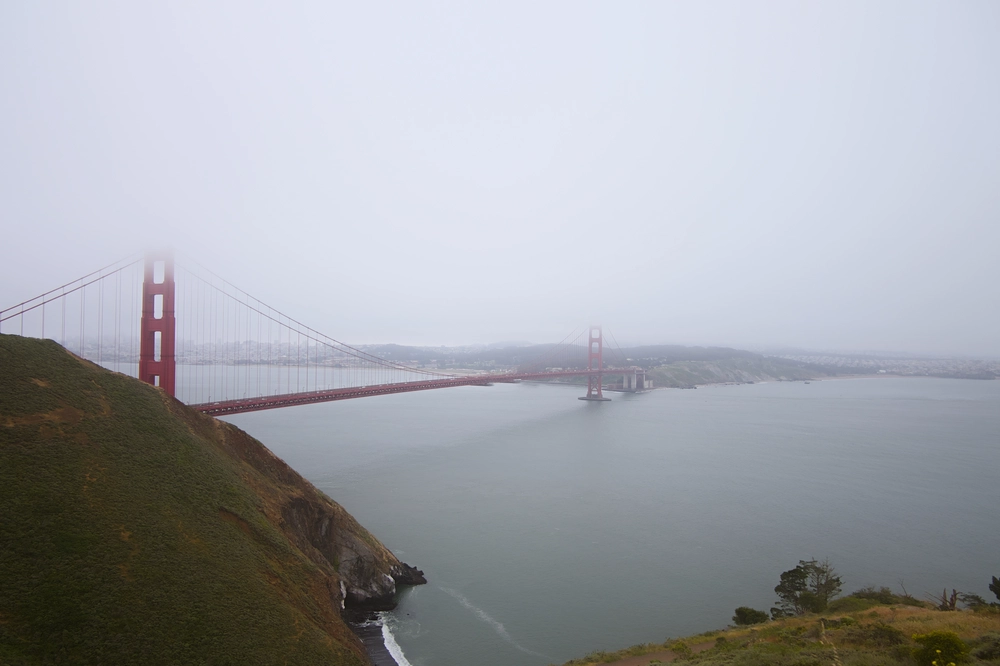
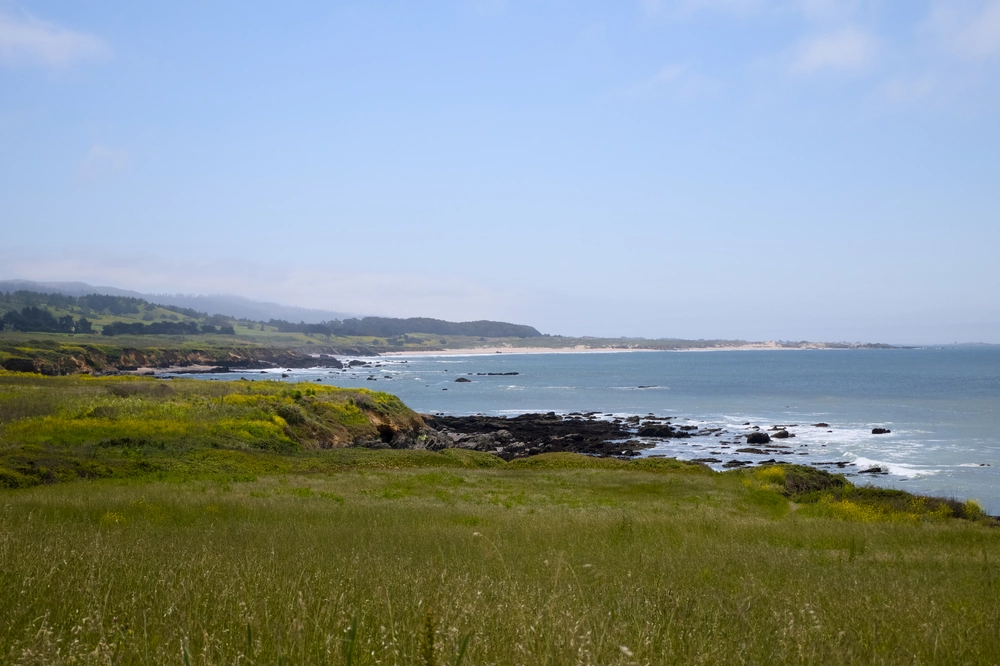
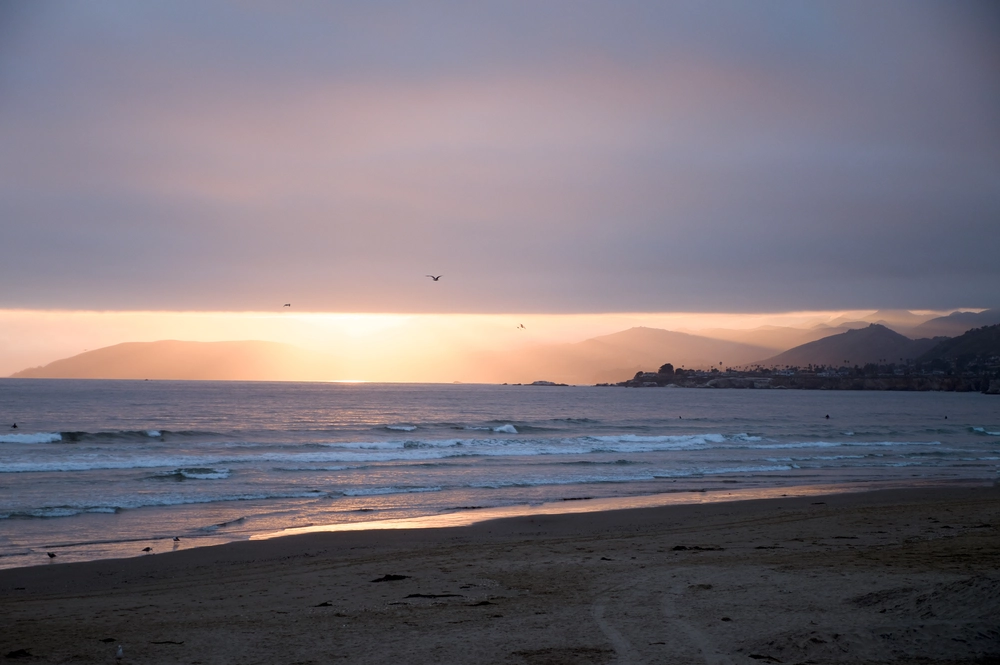
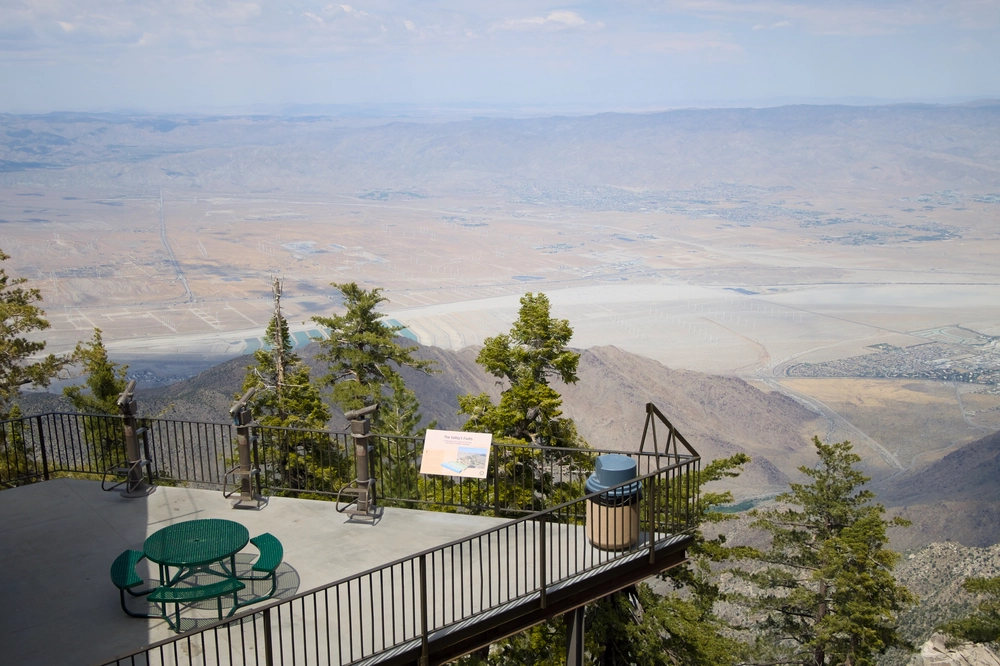
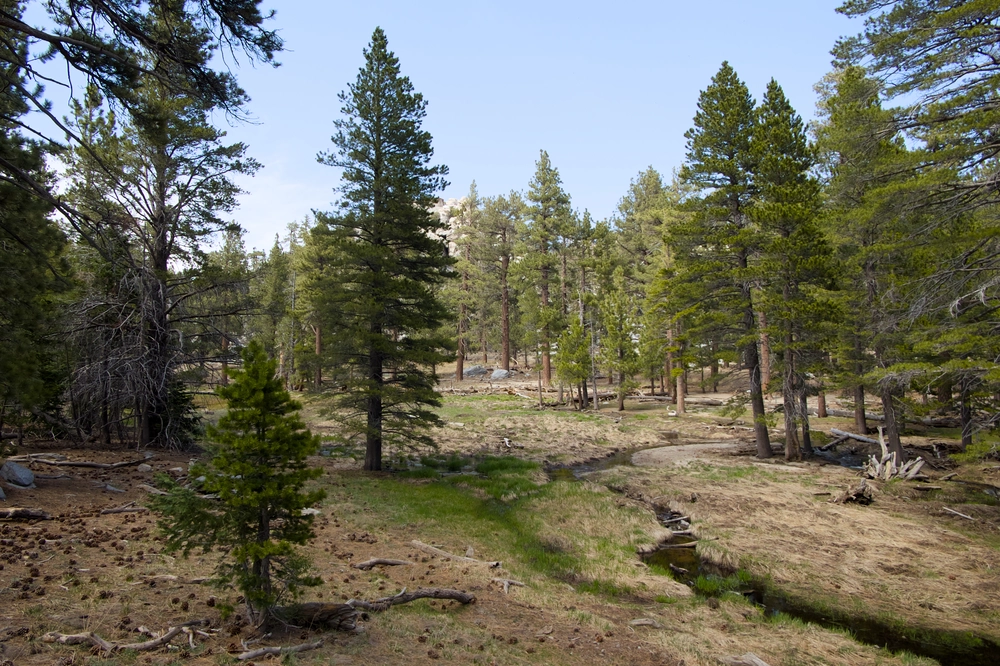
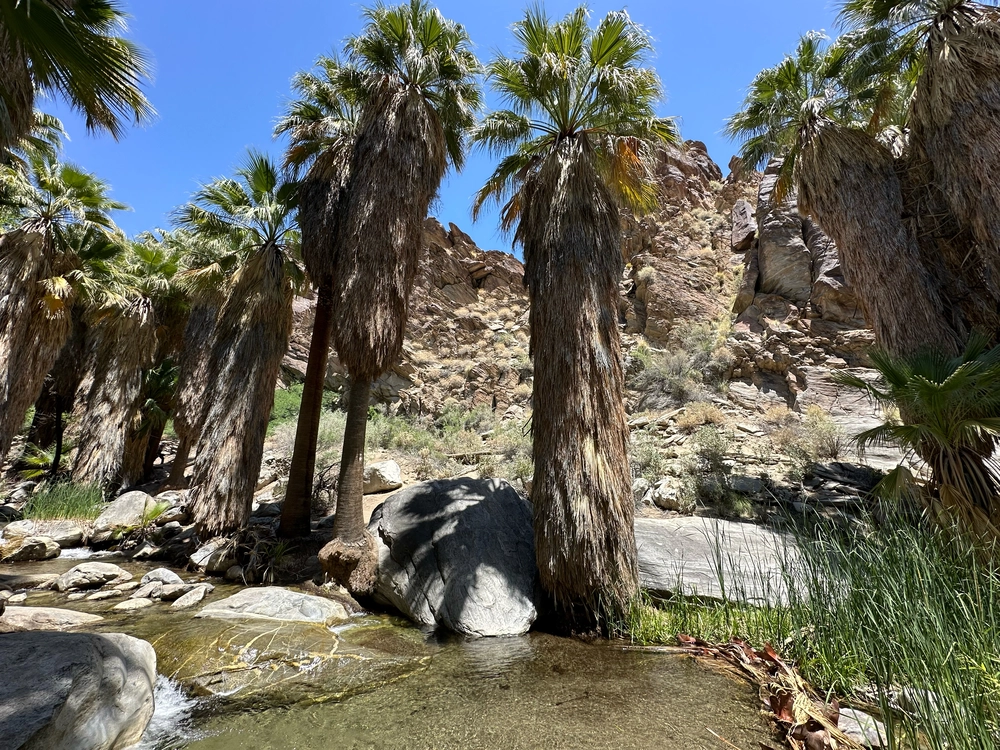
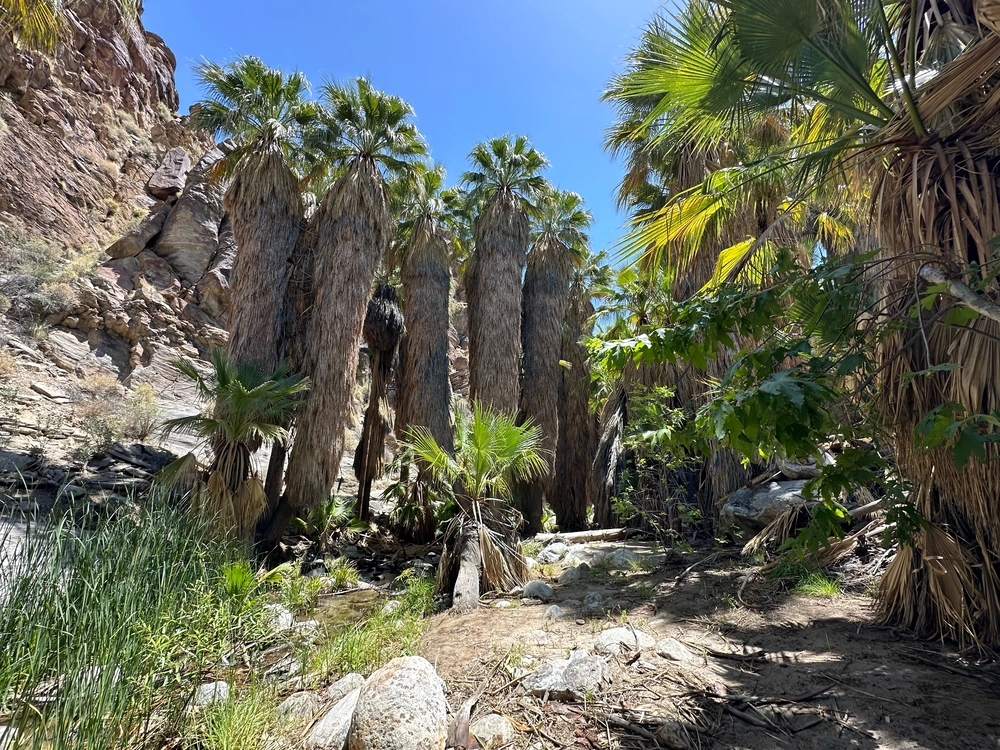
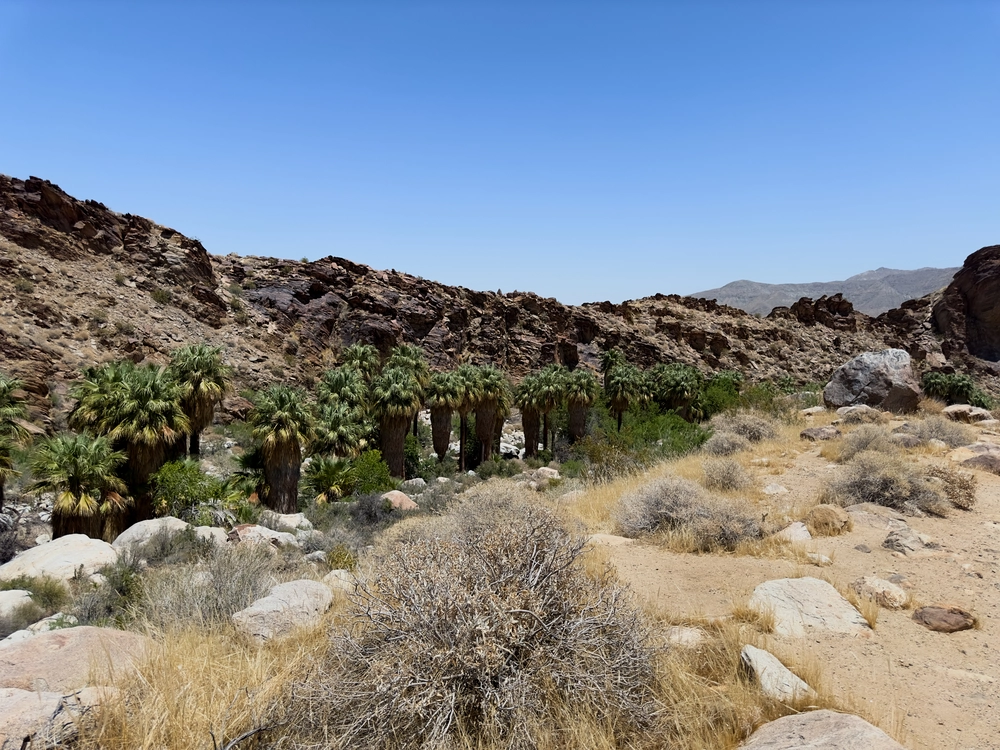
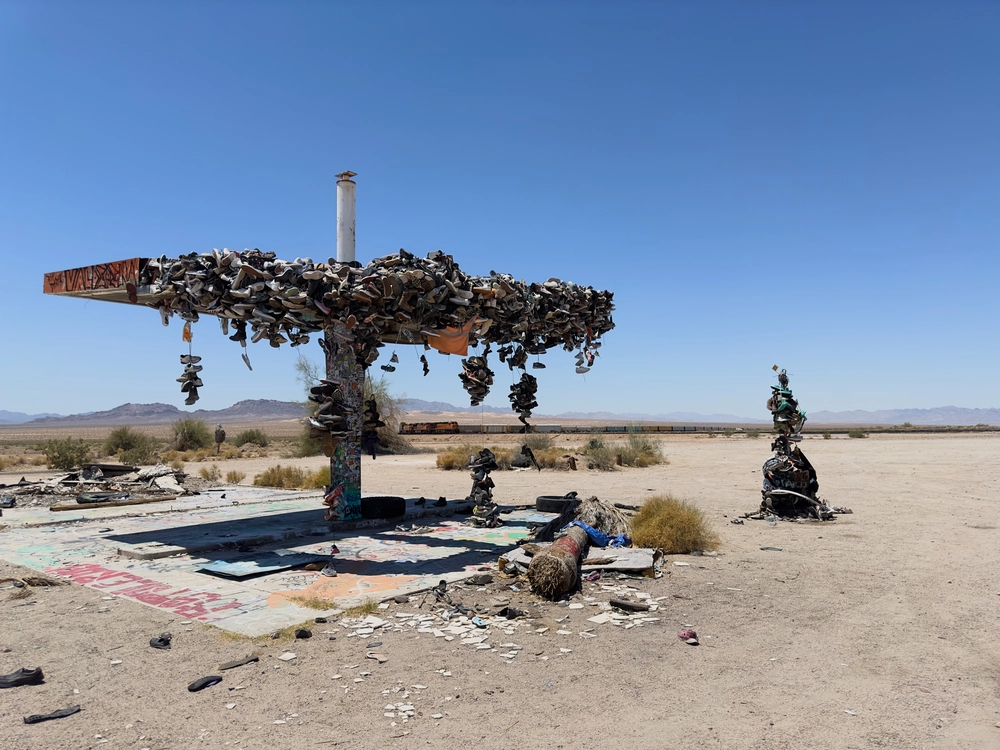
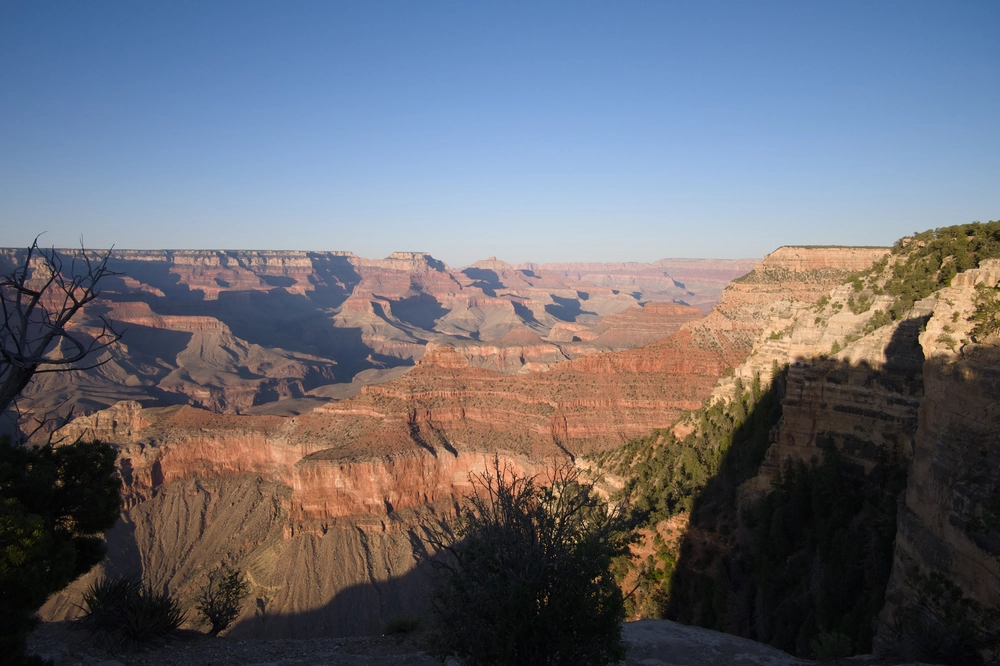
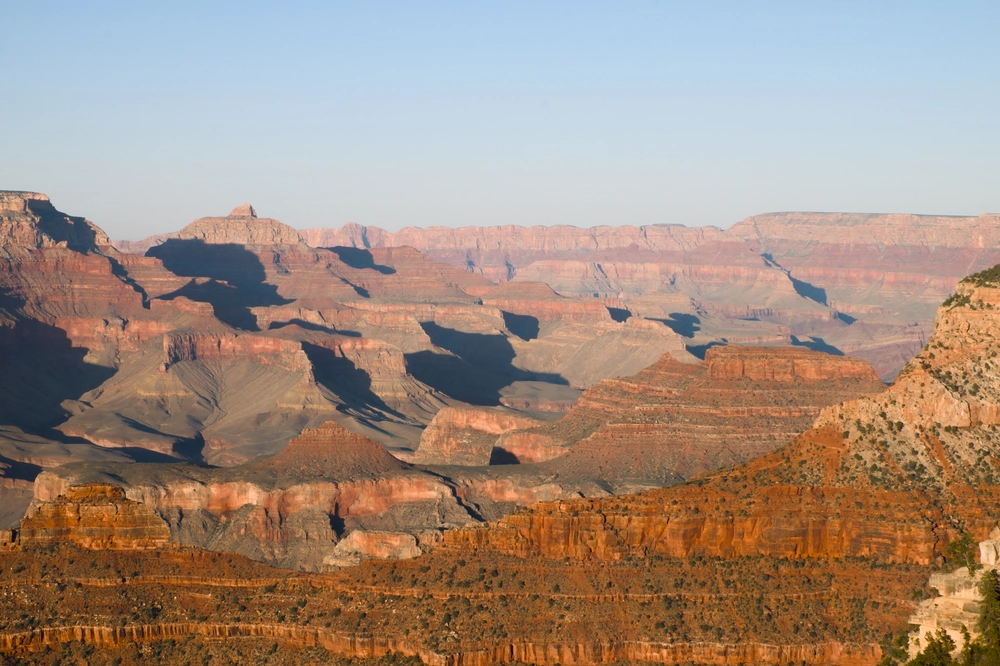
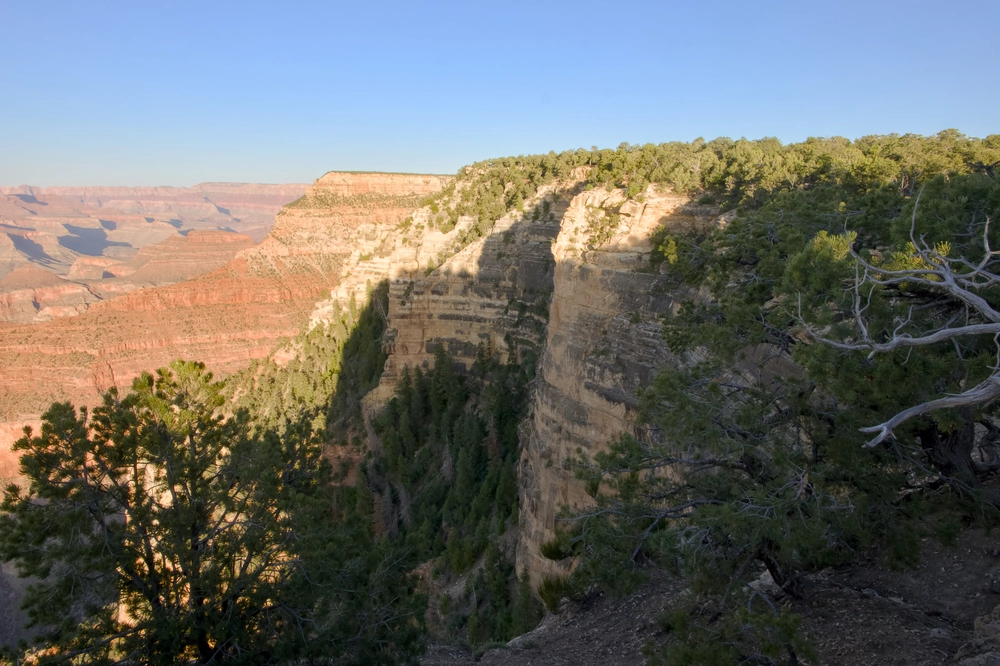
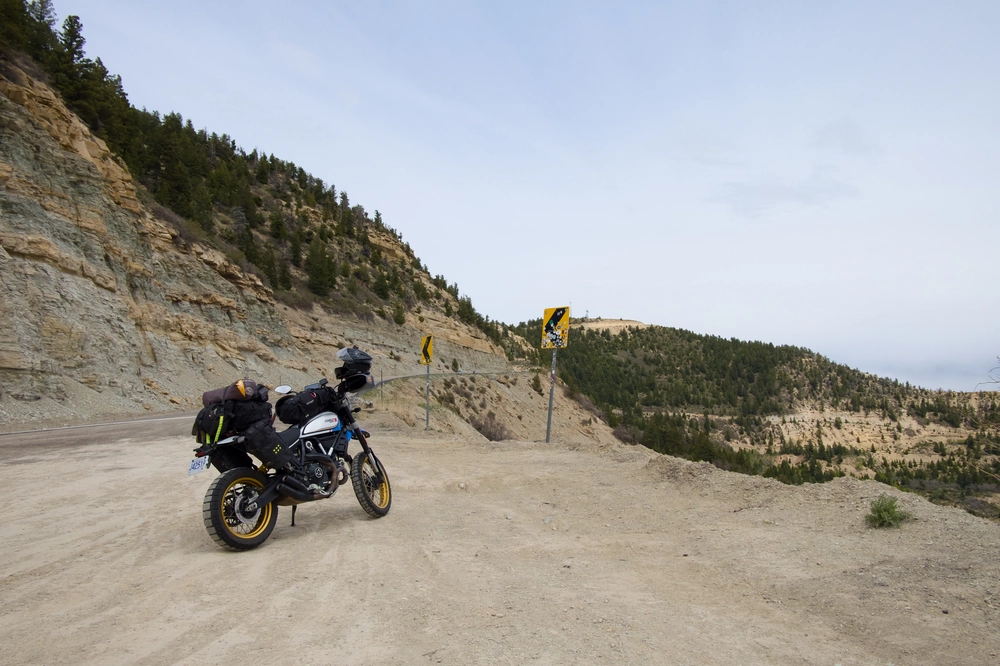
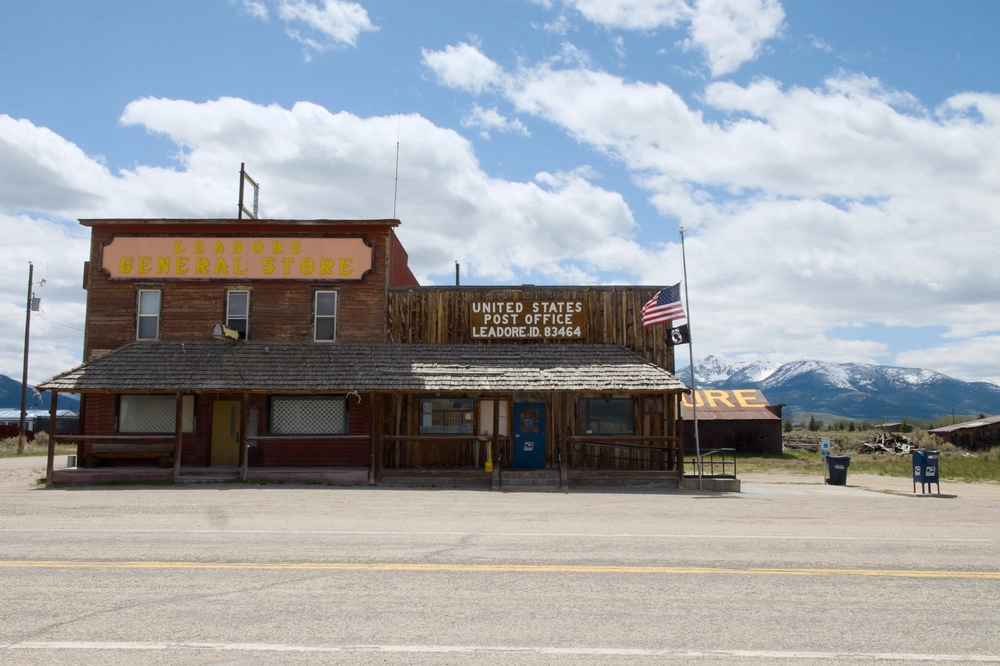
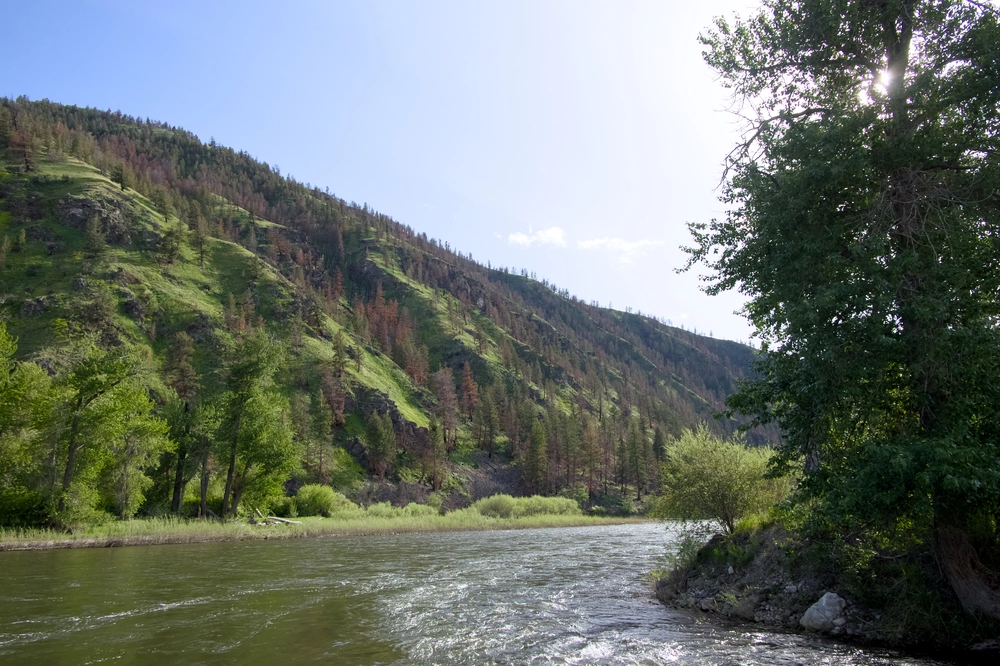
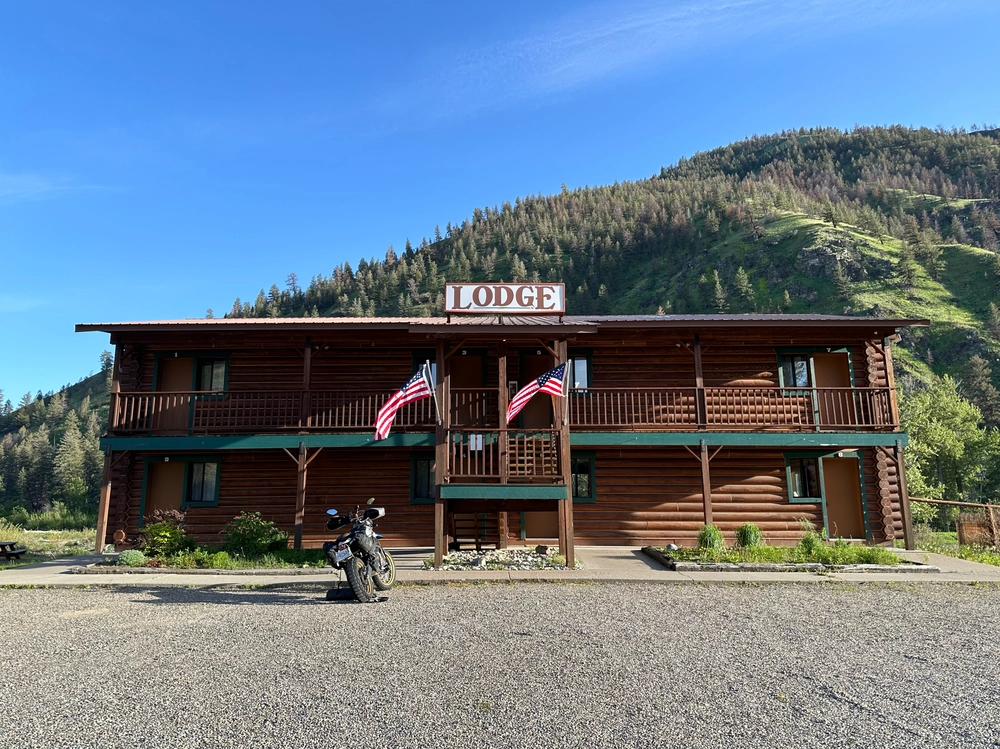
Here are a few of my favourite photos from my three-week motorcycle adventure through
the American west.
Note: All images were resized to a maximum of 4032 px wide after the metadata was
processed. Image Sizes indicated above reflect the original image size prior to
resizing.
The objective today is to cut as much useless cruft from the packing list as possible.
I need to outfit myself to ride through very hot temperatures in Southern California
and Arizona, and very cold temperatures in Wyoming and Montana. It’s only May and even
in the more temperate Pacific Northwest, overnight temperatures dip quite low. I also
have a few days scheduled with friends in Palm Springs, so I’ll need enough kit to
look presentable in regular society (to the extent that that’s possible for me).
I need some basic tools to fix a puncture or adjust the suspension. This is America,
so a CAA/AMA membership should negate the need for spare parts, but I would want to
bring spare shift/clutch/brake levers, oil filters and other model-specific items if
venturing further.
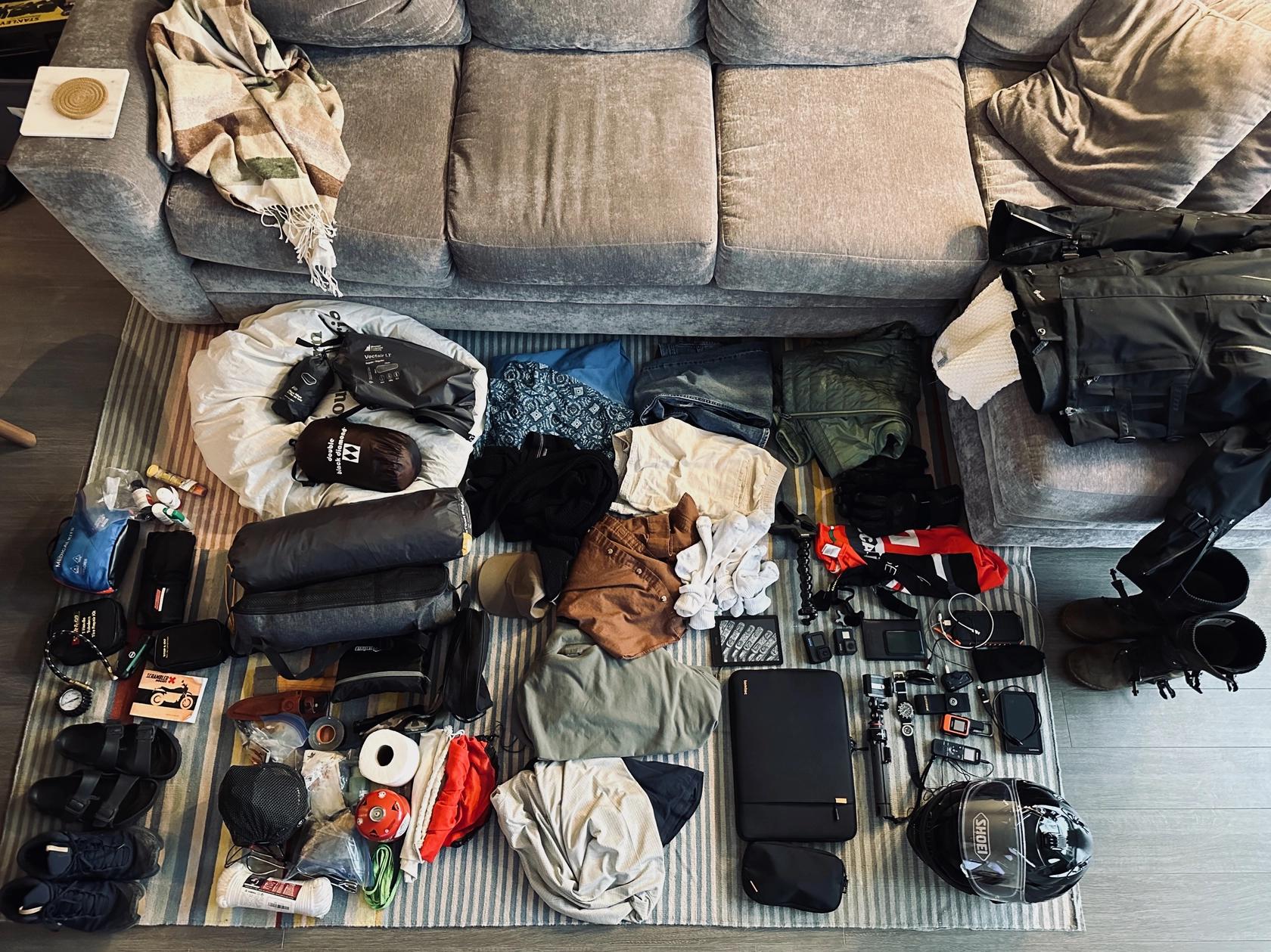
Behold, lots of shit on a rugh.Behold, lots of shit on a rug.
Let’s break it down by bag. I have five pieces of soft luggage that strap to the bike
and provide about 84 litres of capacity in total. I can also strap bulkier items like
my tent on top of the luggage.
Kriega OS-12 x 2 saddlebags
These are positioned lower and more central on the bike, so I’ll put the heaviest and
least fragile items in here like tools and camping hardwear. These bags are also
easier to access without unstrapping anything, so I put a few quick-access things here
as well, just minding that if I hit the dirt, anything breakable in the side luggage
will get a little smashy. Likewise, it’s not a good place for a first aid kit assuming
if I fall and hurt myself, whatever is in the side luggage will be underneath a 450
lb. motorcycle and difficult to access.
Right-hand bag
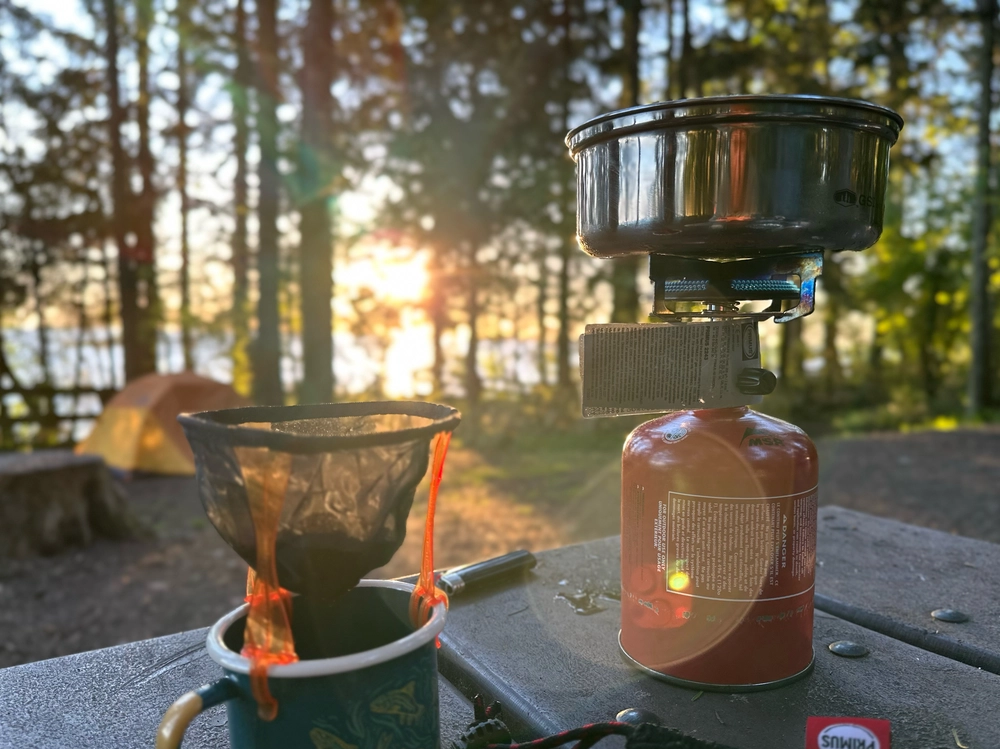
Primus burner
Fuel canister
Stainless pot/plate set
Small skillet
Ceramic mug
Collapsible pour-over coffee filter
Salt, pepper, olive oil, ground coffee
Fork, spoon, pocket knife
Tongs (you laugh, but you’ve never known the pain of dropping a nice cut of steak in
a fire pit)
Camp soap and scrubber
Small garbage bag
Roll of toilet paper
Shower flip-flops
Tent footprint/light tarp
Kindle
Left-hand bag
Basic tool roll
Multi allen key tool (Ducati likes allen keys)
Stop & Go T-Handle Tubeless tire repair kit
Stop & Go mini air compressor
Tire pressure gauge with deflator button
Chain lube (every thousand kilometres gotta keep that thing saucy)
Gorilla tape
Multi-tool pocket knife
Headlamp
Flashlight
Rope
6 ft. webbing strap/tie-down
Giant Loop Armadillo spare fuel bag, 2 gallon (Lucia has a small tank, especially
for an 803 cc twin)
Ducati user manual
Summer riding gloves
Toque
Cap
Kriega US-30
Large tail bag. I’ll put my clothing in here as well as my laptop, and I’ll try to
avoid heavy items to keep the weight centered over the footpegs as much as possible.
Jeans
Shorts
Buttoned shirt
Lightweight hoodie
T-shirts x 4
Thermal base layer, top and bottom
Socks and underwear x 5
Swim trunks
Quick-drying travel towel
Laptop and peripherals
Kriega US-20
Medium-sized tank bag. I’ll put soft camping items and miscellaneous bulky items in
here. More weight over the tank helps keeps the bike stable under load.
Medical kit
Lightweight down sleeping bag
Inflatable sleeping mat
Inflatable pillow
Down quilt (for such a range in temperatures, it’s easier and more versatile to do a
light sleeping bag and layer on a quilt when needed)
Arc’Teryx low-top hiking boots/shoes
iPad
Honestly, shoes are the toughest thing to reason about. They are both bulky and heavy,
and for three weeks of varied activity, including dinners and nights out, I would love
to bring a pair of sneakers that I can dress up more. I just don’t have the space, but
I recognize I may need to keep an eye out for a pair of shoes along the way that
collapse to a small size but can look sharp in a pinch.
Kriega US-10
Small tail bag that can attach to the larger ones. The US-30 in this case. I leave
some room in this one for groceries.
Water bottle
Light toiletry bag
Patagonia Nano-Puff jacket
Attached items
Strapped directly to the tail using Rok Straps over the US-30 are the tent, hatchet,
and light folding chair. Opulent, I know.
I am going to bring my Hippo Hands hand guards on this trip given the likelihood of
rain and certainty of cool temperatures in the mountains. They’ll be awkward in the
hotter climates, but they’re too large to pack away so I think it’s easiest to just
fix them on at the outset and leave ’em.
I’ll keep my FUJIFILM X-T10 camera over my shoulder generally, and a GoPro Hero 11
mounted on a rigid mount above the wind screen facing forward. I also have a Hero 7 on
a flexible clamp mount I can use for B-roll. Rounding it out on the handlebars is a
Garmin Zumo XT Navigator that frankly deserves an entire blog post of its own to
unravel the dark wisdom of the Garmin software engineer.
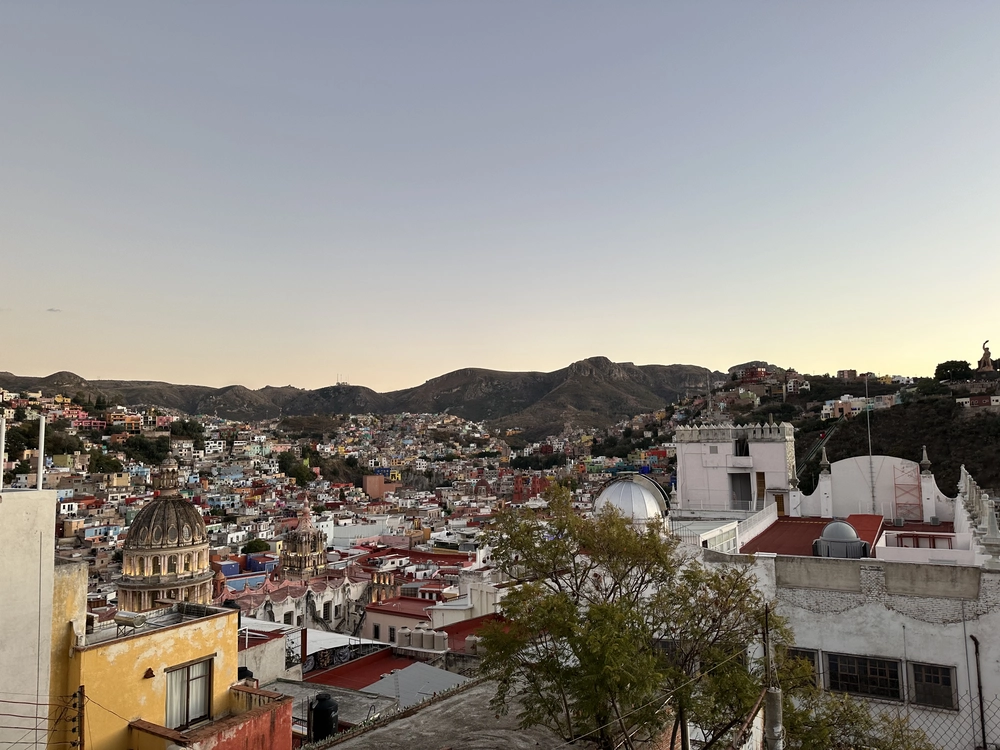
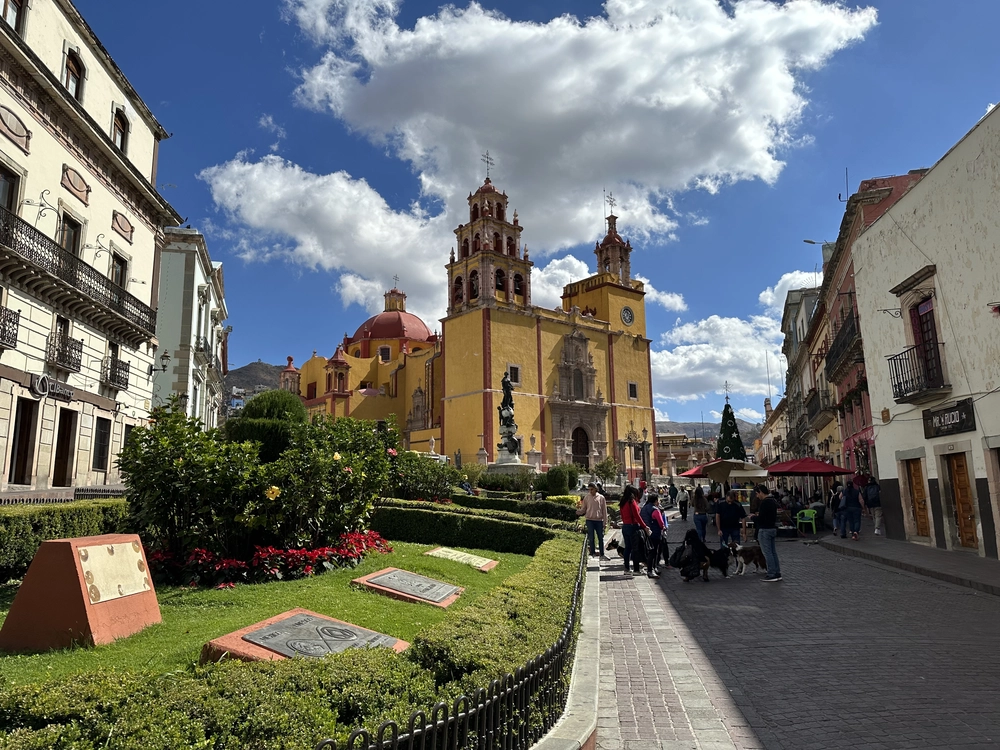
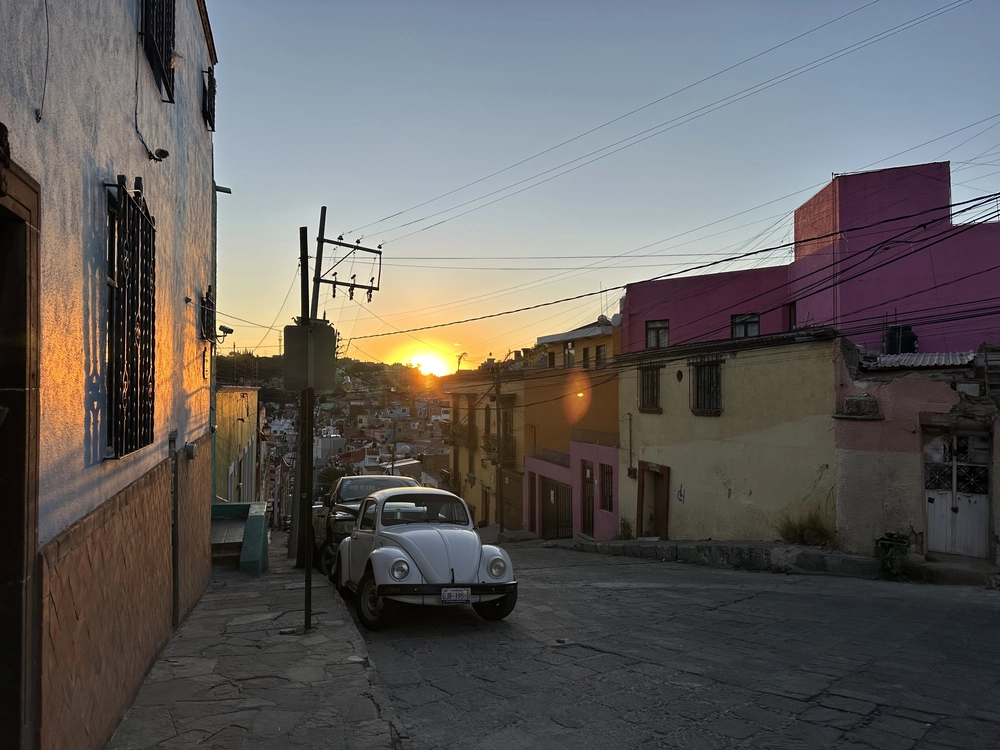
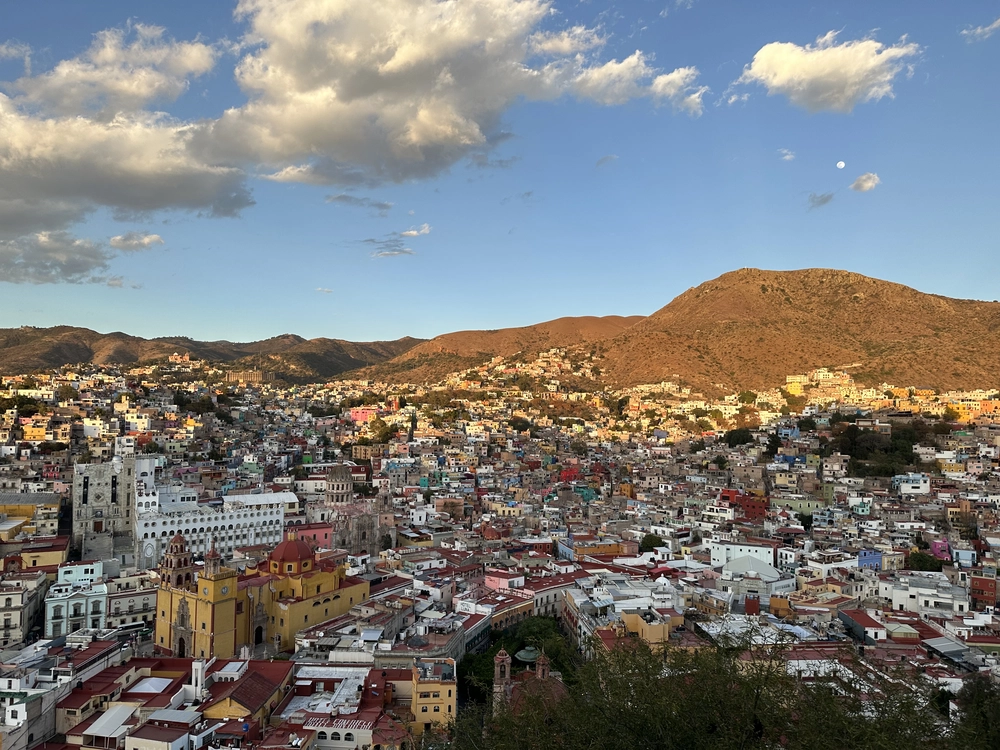
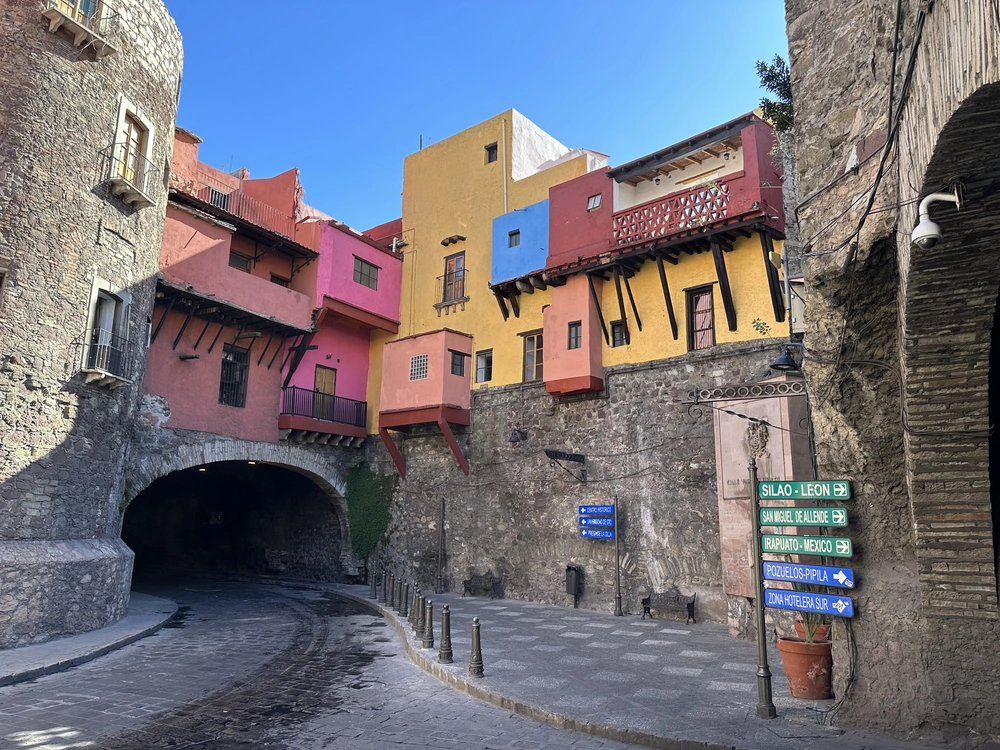
Guanajuato is my favourite city in Mexico. The centro historico is built into a
valley, and many of the roads are tunneled through the mountains that surround it. The
city itself has been built and rebuilt upon its former self, with a subterranean level
comprised of the haciendas that once lined the Guanajatu River.
My first thought when I got here was, why? Why tunnel through three kilometers of
mountain to build a town here? The answer is silver. The area around
Guanajuato accounted for more than two-thirds of the world’s silver production leading
into the 19th century. The primary mine—La Valenciana—is still operational.
Guanajuato was also the site of the first battle of the Mexican War of Independence.
You can still see the bullet holes in the Alhóndiga de Granaditas (grain exchange
building next to the central mercado).
Guanajuato is about 4 to 5 hours by bus from Mexico City and well worth the trip. It’s
also a very reasonable day trip (and beautiful drive) from San Miguele de Allende.
Note: I’ve edited this post. It was first posted on January 4, 2023 with only the
leading image. When I first posted the picture, it was in the early days of ChatGPT
and I was of course excited to try to generate some text with it. I did so with a
short description of Guanajuato City as a caption, and with the benefit of hindsight
I’m no longer comfortable polluting the internet with content I didn’t write myself.
All of the photos beyond the first were published on March 23, 2024 and the text is
my own.